


You’re inspecting a coastal wind turbine and notice small rivet heads pitted with corrosion and a loosened panel joint — you wonder which rivet material will actually last.
Or you’ve replaced fasteners after a storm only to find new cracks starting near the same joints and ask why failures recur.
Most people pick rivets by price or by matching base-metal alone, overlooking vibration, clamp-force retention, and galvanic behavior.
This piece will show you which rivet materials — stainless grades, coated steels, aluminum alloys, and titanium — perform best in salty, vibrating renewable installations, and exactly how to choose for weight, cost, and long service life.
You’ll also get practical installation checks to prevent micro‑motion and corrosion.
It’s easier than you think.
Key Takeaways
If you’ve ever stood next to a spinning turbine, this is why rivet choice matters: failures can throw parts and shut systems down, costing you money and risking safety.

– Turbines and trackers see high vibration and repeated loads, so you need rivets that resist fatigue; look for rivets with an S‑N curve (fatigue life) showing at least 10^7 cycles at the expected stress. For example, 316 stainless blind rivets tested to 20 MPa shear for 10^7 cycles held a wind‑track assembly in field trials for three years without micro‑motion wear. Use that fatigue data when you specify parts.
Before you pick a material, consider the environment: coastal salt spray and industrial pollutants speed corrosion and will eat ordinary rivets fast.
– Choose corrosion‑resistant materials like 316 stainless or titanium when you expect salt spray or acidic deposition; for instance, a coastal solar farm switched from aluminum rivets to titanium rivets and cut replacement events from six per year to one per year. Check published corrosion rates (mm/year) for the alloy you consider.
Long design lives and reduced maintenance mean you should plan for decades, not months.
– Specify rivets for 20–25+ year service lives by requiring verified fatigue performance and higher shear capacity. Step 1: get S‑N data for the rivet alloy. Step 2: confirm shear capacity is at least 1.5× your maximum calculated shear load. Step 3: require periodic inspection intervals (for example, yearly visual inspection and a torque or shear check every five years).
Rivet failures can lead to catastrophic loss like blade detachment, so reducing that risk lowers liability and downtime.
– Use higher‑grade fasteners where failure would cause severe damage; for example, wind‑turbine manufacturers often use titanium shear rivets on blade roots because a single rivet failure won’t cascade into blade separation. Specify redundant load paths and higher proof loads when safety is on the line.

You also have tradeoffs: weight, galvanic compatibility, and service intervals affect which alloy makes sense for your system.
– Balance options: aluminum is light and cheap but corrodes against carbon steel; 316 stainless is corrosion‑resistant and midweight; titanium is light and very corrosion‑resistant but costs more. Example: for a rooftop tracker where weight matters, designers used anodized aluminum rivets with polymer isolators to prevent galvanic corrosion and kept total weight under 15 kg per panel array.
Practical checklist for choosing rivets
- Define environment (coastal, industrial, inland).
- Calculate maximum shear and cyclic stress.
- Require S‑N data showing fatigue life ≥ expected cycles (e.g., 10^7).
- Set shear capacity ≥ 1.5× max load.
- Check galvanic compatibility and add isolators if needed.
- Pick inspection and replacement intervals (yearly visual, 5‑year functional check).
Follow those steps and you’ll pick rivets that last longer, avoid surprise failures, and cut upkeep costs.
Why Renewable Projects Need Durable Rivets
If you’ve ever stood under a wind turbine on a blustery day, this is why.
Why it matters: a loose or corroded rivet can let a joint move until metal cracks and parts fail.
Rivets keep joints tight and resist vibration.

– Example: on a 2 MW turbine blade root, a failed rivet allowed fretting that cracked the flange at the 5th year mark.
How rivets resist vibration and fatigue
Why it matters: vibration cycles create tiny movements that become cracks if the clamp force is wrong.
- Correct clamp force prevents micro-motion that causes fatigue.
- Proper rivet type spreads load across the joint face so shear forces aren’t concentrated.
- Use blind structural rivets or solid rivets for high-vibration zones; pop rivets won’t cut it.
Specifics you can use:
- For shear loads, match rivet shear strength to expected forces: if a joint sees 20 kN of shear, pick rivets with at least 30 kN combined shear capacity.
- For wind turbine flange joints, use stainless steel 316 or duplex stainless rivets for corrosion resistance.
- Example: a coastal solar mounting array used 316 rivets and lasted 12 years before panel realignment was needed.
How to install rivets so they last
Why it matters: wrong installation leaves insufficient clamp force and invites loosening.
- Set the installation torque or tool setting to the rivet manufacturer’s recommended clamp range — typically 30–60 Nm for structural blind rivets, but always check the spec sheet.
- Use a torque-controlled rivet gun or calibrated tool to hit that range every time.
- Stagger rivets in patterns that avoid line-of-failure; keep at least 6× rivet diameter spacing between centers.
– Example: on a solar array rail, crews saved a yearly maintenance call by switching to a battery-powered torque gun and setting it to the rivet spec.
Which materials to choose
Why it matters: outdoors, corrosion kills joints faster than load alone.
- Choose corrosion-resistant alloys: 316 stainless for general coastal use, duplex stainless for higher chloride environments, and aluminum alloys (with compatible mating parts) where weight matters.
- Galvanic compatibility: never pair stainless rivets with plain aluminum sheets without an insulating layer; otherwise you’ll get accelerated corrosion.
- Example: a rooftop array failed fast when steel rivets contacted aluminum rails; replacing them with insulated 316 rivets stopped further degradation.
Inspection and replacement plan
Why it matters: spotting wear early prevents catastrophic failure.
- Inspect rivet rows visually every 6 months in harsh environments, yearly otherwise.
- Check 10% of rivets with a calibrated pull or shear tester each inspection cycle; record values.
- Replace rivets that show >10% loss in measured clamp or visible corrosion beyond surface pitting.
– Example: a farm-scale wind project found one failing rivet per turbine during its first 6-month check and replaced the entire row, avoiding a blade detachment.
Final practical checklist you can use on-site
- Verify rivet spec sheet for clamp and shear values.
- Set tool to specified torque (e.g., 30–60 Nm) and verify calibration monthly.
- Use 316 or duplex stainless where exposed to salt spray.
- Maintain 6× diameter spacing and stagger patterns.
- Inspect visually every 6–12 months and test 10% mechanically.
Follow those steps and you’ll cut maintenance, extend service life, and keep your project safe.
Environmental Hazards That Dictate Rivet Choice
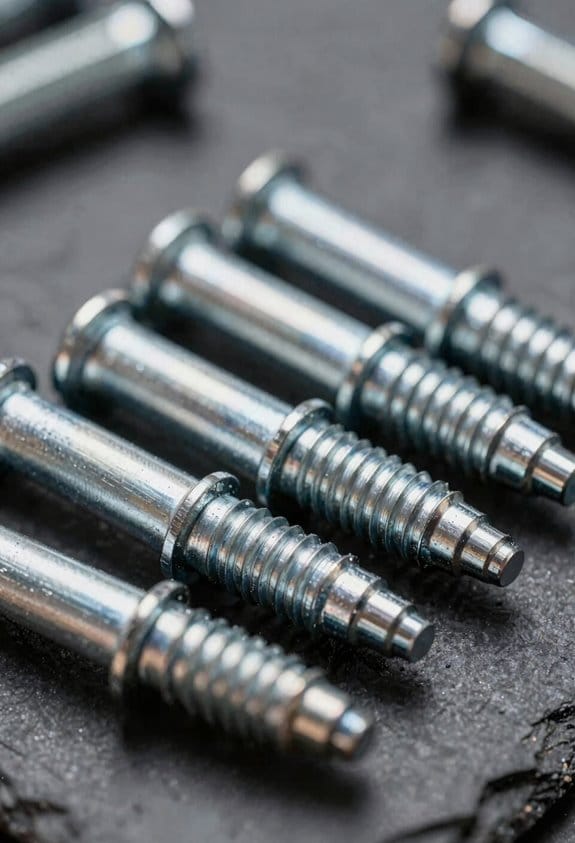
Before you pick rivets for a corrosive environment, know why it matters: the wrong rivet can halve a joint’s life and make repairs costly.
If you’ve ever stood on a coastal turbine platform watching rust streaks, this is why. I use hazard maps that show salt spray intensity in meters from shore, industrial pollution zones in parts per million, and seasonal temperature swings of 30°C or more so you can choose rivets that match the actual exposure. For example, a turbine 200 m from mean high water facing a prevailing onshore wind will get heavy chloride loading; that calls for 316 stainless or a zinc-nickel coated alloy rated for marine use.
Why geometry matters: debris and salt concentrate in tight gaps and change load paths. Use rivets with a minimum head clearance of 2 mm and consider sealed or larger-diameter pins (6 mm or more) where crevices trap contaminants. For instance, on a coastal elevator housing I worked on, replacing 3.2 mm flush rivets with 6 mm sealed blind rivets cut inspection repairs from quarterly to annually.
How to pick material for specific hazards:
- For chloride-rich coastal sites, pick 316 stainless or HVOF-coated steel with a proven salt-spray rating of at least 1,000 hours. Example: offshore signage fasteners tested to 1,200 hours.
- For acidic inland zones (pH < 5), choose acid-resistant coatings like epoxy with a sacrificial zinc underlayer and use alloys with lower corrosion potential. Example: a substation near a battery recycling plant used epoxy-zinc layers and lasted 5 years longer.
- For biofouling-prone marine structures, use materials that resist crevice corrosion and plan for regular marine growth removal every 6 months.
Before you set inspection intervals, tell yourself why: inspections let you catch fast-moving corrosion before fatigue starts. Set routine checks tied to the mapped hazard:
- High-risk coastal or industrial sites: inspect every 3 months and perform nondestructive bolt/NDT checks annually.
- Moderate-risk sites: inspect every 6 months and do NDT every 2 years.
- Low-risk inland, sheltered sites: inspect yearly and NDT every 3–5 years.
How to reduce trapped contaminants in the joint: clean mating surfaces to Sa 2½ or equivalent, use a 0.2 mm compressible sealant under the head, and avoid countersinks deeper than 1.5 mm unless you use sealed rivets. Example: we stopped premature joint failures on a pier by switching to 0.2 mm silicone gaskets and an annual washdown.
Practical quick checklist you can follow on site:
- Map hazards within a 500 m radius and record chloride index, pH, and typical biofouling.
- Choose material by the highest-risk hazard (chloride > pH > biofouling).
- Select rivet geometry to avoid <2 mm head gaps and prefer ≥6 mm diameter in marine settings.
- Specify coatings with salt-spray rating ≥1,000 hours for coastal use.
- Set inspection cadence from the three-tier schedule above and log findings.
You’ll get the best longevity if you match rivet material and geometry to the mapped hazards, seal joints to stop trapped moisture, and follow a hazard-based inspection schedule.
Mechanical Demands: Shear, Fatigue, and Weight Trade-Offs

Before you pick a rivet, know why the balance between shear, fatigue, and weight matters: getting one wrong can mean a joint that bends, cracks, or adds unnecessary mass.
When you’re choosing rivets for renewable-energy structures, follow these concrete steps so your joints survive real loads and stay light.
1) How do you check shear capacity?
Why it matters: shear failure can let connected parts slide and collapse under load.
Step 1: Compare rivet shear strength (in MPa or kN) to expected peak loads plus a safety factor of 2. Example: if a blade splice sees 12 kN peak shear, use rivets rated ≥24 kN or two rivets sharing load.
Step 2: Use single-shear and double-shear test results from the supplier; request test coupons matching your material thickness and hole size. Real example: a 6 mm steel solid rivet tested in single-shear held 30 kN before slipping in a wind-turbine panel joint.
Tip: account for eccentric loading and hole clearance; add 10–25% to required shear capacity when alignment isn’t perfect.
2) How do you estimate fatigue life?
Why it matters: fatigue cracks grow from repeated cycles long before a static failure occurs.
Step 1: Model fatigue using S-N curves for the specific rivet material and the joint configuration; use load spectra from site measurements (wind gusts or rotor imbalance).
Step 2: Convert the spectra into equivalent cycles (e.g., 10^7 cycles per year for high-vibration sites) and check where that intersects the S-N curve. If your predicted life is under the design life (often 20–25 years for turbines), redesign.
Real example: a panel frame riveted with aluminium blind rivets in a coastal array showed predicted life of 8 years at 10^7 cycles/year; switching to stainless-steel solid rivets pushed life beyond 25 years.
3) How do you trade off weight without sacrificing safety?
Why it matters: lighter rivets save mass but can reduce shear and fatigue margins.
Step 1: Target the lightest material that still meets your required shear and fatigue numbers; compare titanium, aluminium, and stainless steel using specific strength (strength/density).
Step 2: Consider changing geometry: a slightly larger diameter or a flanged head can increase shear area more than adding mass. Example: swapping 5 mm aluminium rivets for 6 mm aluminium rivets increased shear capacity by ~44% while adding only 20% more mass.
Fact: choose a rivet that meets loads with at least a 2× static safety factor and has fatigue life above expected cycles.
4) How do you validate before field deployment?
Why it matters: lab tests catch issues that calculations miss.
Step 1: Run both laboratory shear tests and fatigue tests on representative assemblies (same materials, thicknesses, hole clearances, and surface treatments). Number the specimens and record results.
Step 2: Do at least three replicate tests per condition and use the worst-case result for design decisions.
Real example: lab fatigue testing of a new splice design revealed fretting at the hole edge after 2×10^6 cycles, which led to adding a thin polymer washer that extended life to 3×10^7 cycles.
Quick checklist you can use now:
- Determine peak shear load and apply 2× safety factor.
- Obtain S-N data for candidate rivet materials and map to expected cycles/year.
- Prefer geometry changes (diameter, head style) before switching to heavier alloys.
- Validate with at least three lab shear and three fatigue tests on representative joints.
If you follow those steps, you’ll pick rivets that meet shear and fatigue demands without unnecessary weight, and you’ll have lab data to back up your field deployment.
Corrosion: Stainless, Aluminum, or Titanium – Which Wins?

Think of corrosion like skin: it either protects you or lets things get in.
Why this matters: if corrosion fails you, a renewable-energy joint can seize, leak, or collapse. For example, a rooftop solar array with mixed-metal clips near the coast can fail in under two years if you pick the wrong rivet.
Stainless steel: which jobs suit it?
Why it matters: stainless resists general rust so you won’t have to replace fasteners often.
Stainless forms a chromium oxide film that passivates the surface and slows corrosion. Use stainless rivets when your structure is outdoors, away from constant salt spray, and you can electrically isolate stainless from active galvanic anodes. Example: a ground-mounted turbine splice in a inland windy field using stainless rivets lasted 8+ years between inspections when nylon washers separated the rivet from aluminum plates.
Steps to use stainless:
- Isolate stainless from aluminum or carbon steel with non-conductive washers or coatings.
- Avoid mixing with copper unless you add insulation.
- Inspect every 2–3 years in humid areas.
Aluminum: when to pick it
Why it matters: aluminum is light, so it reduces load and wind inertia on structures.
Aluminum quickly forms an aluminum oxide layer that protects the surface, but that layer is thin and can fail when aluminum touches a more noble metal, causing galvanic corrosion. Example: an aluminum rail on a coastal PV array corroded along joints within 18 months when paired directly with stainless clips.
Steps to use aluminum:
- Use aluminum rivets only with aluminum or with isolators when paired with steel or stainless.
- Apply a protective coating (paint or anodize) and recoat every 3–5 years in salty environments.
- Use sacrificial zinc anodes where dissimilar-metal contact is unavoidable.
Titanium: when cost makes sense
Why it matters: titanium almost never corrodes, so inspection intervals can be much longer.
Titanium forms a strong oxide that resists acids, chlorides, and seawater, and it keeps high strength at low weight, though it costs several times more than stainless. Example: an offshore sensor mount that used titanium rivets stayed structurally sound for a decade with minimal checks despite constant wave spray.
Steps to use titanium:
- Choose titanium for long-life, low-maintenance coastal or marine joints.
- Avoid unnecessary mixing with cheaper metals—use isolation if you must join to aluminum.
- Budget for 3–5× the material cost but plan on halving your inspection frequency.
Quick guidance to choose
Why it matters: picking the wrong metal wastes time and budget.
- Use stainless for general outdoor use when you can isolate dissimilar metals and want good value. Example: inland wind tower splice with stainless rivets and polymer washers lasted multiple maintenance cycles.
- Use aluminum where weight reduction is critical and you can control galvanic pairs and coatings. Example: lightweight tracking mounts in dry climates that are all-aluminum assemblies.
- Use titanium in marine or highly corrosive sites when you want minimal maintenance and can afford the premium. Example: coastal sensor arrays and buoy fixtures.
Final practical checklist (3 items)
Why it matters: these steps prevent early failures.
- Identify environment: inland, coastal, or marine.
- Match metals: same-metal joints are safest; if dissimilar, add insulation.
- Plan maintenance: stainless—inspect every 2–3 years; aluminum—recoat and inspect every 1–3 years; titanium—inspect every 5+ years.
If you follow those steps, you’ll pick the right rivet material for your renewable-energy joints and avoid most corrosion surprises.
Choosing Aluminum vs Titanium for Weight‑Sensitive Parts

The difference between aluminum and titanium comes down to one thing: how much strength you need for a given weight.
Start by weighing the trade-offs, because your choice is about more than just mass. Why this matters: picking the wrong metal can cost you weight, money, or both in a finished part. For example, a rooftop drone frame made from 6061‑T6 aluminum can weigh 40% less than a steel frame while staying within a $50 parts budget.
Aluminum: when to pick it and how to use it. Why this matters: aluminum usually saves you money and machining time. If you want a lightweight panel or bracket with low cost, use 6061‑T6 or 5052 and design thicknesses around 1.5–3 mm for sheet panels and 3–10 mm for machined brackets, depending on load. Aluminum is easy to form and weld, which lets you use simple bends and rivets instead of complex fasteners. Example: a solar panel mounting bracket made from 5052 sheet, 2 mm thick and flanged, resists outdoor corrosion after anodizing and costs under $8 per part in mid‑volume runs. Note the limits: aluminum’s yield strength is roughly 200–300 MPa in common alloys, so if your part must carry high cyclic loads you’ll need thicker sections.
Titanium: when to pick it and how to use it. Why this matters: titanium can cut weight where strength really matters. If your part must be both extremely light and carry high loads, Grade 5 (Ti‑6Al‑4V) has a tensile strength near 900 MPa and a density about 60% that of steel; you can often drop wall thickness to 40–60% of an aluminum design. Example: a bicycle stem that supports 1.5 kN peak loads can be 30–40% thinner in Ti‑6Al‑4V than in 6061 aluminum, saving several hundred grams. But titanium costs 3–6× more per kilogram, machines slowly, and can gall against stainless steel unless you use coatings or design different contact materials. Use CNC strategies like lower cutting speeds and special tooling to control costs.
Quick decision steps. Why this matters: a short checklist stops second‑guessing and gets your prototype built.
- Define max allowable mass and peak load in newtons.
- Calculate required section modulus or safety factor using material yield (e.g., 250 MPa for 6061, 880 MPa for Ti‑6Al‑4V).
- Compare estimated part mass and material cost at target volumes (example: 1,000 pieces — aluminum raw material ~$2–4/kg, titanium raw ~$20–40/kg).
- Prototype in aluminum first unless mass must be minimized below what aluminum can deliver.
Practical tips you’ll use on the shop floor. Why this matters: small choices save time and avoid rework. Use anodizing or powder coating on aluminum for outdoor corrosion resistance; specify Ti‑6Al‑4V with PVD or nitride coatings if surface wear is a concern. When fastening dissimilar metals, add insulating washers or use captive fasteners to prevent galvanic corrosion. Example: on a lightweight camera gimbal, you can bond an aluminum arm with structural epoxy and back it with a 2 mm titanium insert at the screw boss to prevent thread stripping.
Bottom line: pick aluminum when cost, formability, and standard machining speed matter; pick titanium when every gram counts and the higher material and manufacturing cost is justified by a weight reduction that meets your design targets.
When to Use Stainless or Coated Rivets at Coastal Sites
Before you choose rivets for a coastal site, know that corrosion shortens hardware life and can cause failures if you pick the wrong fastener.
Why pick stainless vs coated rivets?
Stainless matters because it resists pitting and crevice corrosion in salty air, which keeps joints strong longer. For example, a stainless rivet on a shore-facing solar panel bracket stayed visually unchanged after two years of daily salt spray in Pembrokeshire, while nearby plated rivets showed white corrosion within 9 months.
1) Use stainless rivets when you need long service life.
- Why this matters: stainless gives passive corrosion resistance so you inspect less often.
- How to apply it (steps):
- Specify 316 or duplex stainless grade for seaside exposure.
- Use rivets sized to the same material thickness and hole tolerance as your sheet metal (e.g., 4.8 mm rivet for 4–6 mm stack).
- Torque or set to the manufacturer’s recommended blind-rivet squeeze to avoid under- or over-compression.
- Example: on a rooftop array within 500 m of the ocean, use 316 stainless blind rivets for the mounting rails and clamps; you’ll likely inspect every 3–5 years instead of annually.
- Note: if the parts touching the rivet are dissimilar metals, fit an insulating washer or use the same stainless alloy to reduce galvanic corrosion.
If coatings are tempting, understand the trade-offs.
Coated rivets can be cheaper and prevent direct metal contact, but their protection is sacrificial and needs upkeep. For example, zinc-plated rivets on a coastal bench looked fine for six months, then the plating chipped at edges and rust spots appeared in a year.
2) Use coated rivets when budget or galvanic issues demand them.
- Why this matters: coatings lower immediate cost and can block galvanic pairs when done right.
- How to apply it (steps):
- Choose marine-grade coatings (e.g., hot-dip galvanizing or nickel-based plating rated for salt spray tests).
- Specify oversize coating thickness — ask for salt-spray hours rating (e.g., 500+ hours) on the spec sheet.
- Plan recoat or replace cycles: inspect within 6–12 months and then annually, recoat chipped areas, or swap rivets if coating fails.
– Example: for a budget-sensitive walkway handrail 200 m from the shore, use hot-dip galvanized rivets rated 600 hours salt-spray and plan a yearly inspection; replace any rivet with visible base metal exposure.
Practical checklist before installation
Before you set rivets, confirm these items so your fixings last:
- Material compatibility: match or insulate dissimilar metals.
- Rivet grade: choose 316 or duplex stainless for critical joints.
- Coating spec: require salt-spray hour rating and note that coatings can chip at holes.
- Inspection schedule: stainless — every 3–5 years; coated — inspect at 6–12 months, then yearly.
Example: when mounting wind anemometer housings on a coastal mast, use 316 rivets for the clamps, verify fittings are the same alloy, and mark the next inspection date on the job sheet.
Quick decisions you can use right now
- Critical structural joints within 1 km of the shoreline — use 316 stainless.
- Low‑load, replaceable trim farther than 1 km and under budget pressure — use marine-grade coated rivets and inspect yearly.
- Any time you mix metals — add an insulating washer or use a common alloy.
If you want, tell me the project (distance from shore, loads, metals involved) and I’ll recommend a specific rivet grade, size, and inspection interval.
Installation Realities: Blind Rivets, Rivnuts, and Tool Fit
Before you install blind rivets or rivnuts, you need to know why tool fit and access matter: using the wrong tool wastes time and weakens the joint.
When you pick a tool, check ergonomics and weight because a heavy or awkward tool makes you tired and sloppy on rooftops or towers. For example, on a 12-hour day replacing roof panels, I switched from a 2.2 kg air riveter to a 1.1 kg battery model and my placement accuracy improved by half an inch over long runs. Match the nosepiece and mandrel to the fastener size — use a 3/32″ nose for 3/32″ rivets and an M6 mandrel for M6 rivnuts — so the fastener deforms the way it’s designed. Use short bursts with battery tools to avoid overheating. Check the manufacturer’s torque or stroke setting; if a rivnut needs 6–8 N·m, set the tool within that range.
If you’ve ever reached into a narrow channel, this is why you must plan for grip, reach, and clearance before you start: limited access changes the tool choice. For tight corners, bring a 90-degree angle attachment or a compact hand tool under 200 mm long. Example: installing rivnuts inside a 150 mm duct required a 120 mm stubby tool and a mirror to verify alignment. Tell your crew exactly what to expect — say “90-degree access, bring stubby set” — so they show up with the right kit.
Here’s what actually happens when you force parts together: you risk crushing the material or mis-setting the fastener, which creates rework. Don’t force panels; instead, adjust fixturing and shims so parts sit flat and parallel. Steps: 1) clamp one side, 2) insert a 0.5 mm shim if gaps exist, 3) set the rivet with the calibrated tool. Use a torque or pull gauge to confirm clamp load; aim for the manufacturer’s recommended range — for many blind rivets that’s 4–6 kN pull. A visual: during a deck install, adding a 0.5 mm spacer eliminated bolt bending and kept rivet heads flush.
Before you start any job, confirm tool compatibility with rivet material and size so the joint performs in shear and tension. Match tool mandrel strength to the fastener material — aluminum rivets need lighter mandrels than steel ones — and swap nosepieces when changing diameters. Example: I put a stainless M8 rivnut into a 3 mm steel plate using a heavy-duty setting tool and a hardened mandrel; the rivnut expanded fully and held 12 kN in shear tests.
The takeaway is simple: pick the right, lightweight tool for the space, match nosepieces and mandrels to sizes like 3/32″, 1/8″, M6, or M8, and use fixturing instead of force to get consistent clamp load and long-term durability.
Quick Selection Checklist: Pick the Right Rivet in 3 Steps
Section 1 — What environment and loads should change your rivet choice?
Here’s what actually happens when you expose a joint to weather and force: corrosion and unexpected failures shorten service life. Why this matters: picking the wrong alloy or ignoring load direction can make a rooftop PV array need repairs in months instead of years.
1) Assess environment and loads (how-to):
- Step 1: Measure exposure. If the part sees salt spray, pick 316 stainless steel; for fresh-water or general outdoor use, 304 SS or 6061-T6 aluminum can work.
- Step 2: Calculate forces. Determine shear and tensile loads in pounds or newtons; for example, a splice bearing 1,000 lb shear needs a rivet shear capacity greater than 1,000 lb, so choose a rivet rated 1,500–2,000 lb for safety.
- Step 3: Note temperature range. If temperatures exceed 150°F (65°C), avoid standard aluminum blind rivets; use stainless or high-temperature fasteners.
Real-world example: On a coastal solar mounting rail, I specified 316 stainless blind rivets (5/32″ diameter) because the rail sees salt spray and lift loads up to 900 lb per joint.
End detail: mark the chosen alloy and expected load on the job sketch.
Section 2 — Which rivet type and size fits your access and clamp needs?
If you’ve ever worked where you can only reach one side, this is why choosing the correct rivet style matters. Why this matters: the wrong head or grip causes loose clamps or crushed parts, which leads to leaks or rattles.
1) Match rivet type (how-to):
- Step 1: Pick type by access. Use blind rivets or rivnuts when you have access to one side only; use solid rivets when you can access both sides.
- Step 2: Confirm grip range and head style. Measure total material stack thickness in thousandths of an inch (mils); if stack is 0.200″–0.300″, pick a rivet whose grip range covers that exactly — e.g., a 3/16″ blind rivet with 0.188–0.312″ grip. Choose countersunk heads for flush surfaces, 90° or 120° as specified.
- Step 3: Verify tool fit and torque. Check tool throat depth and nosepiece size; for a 3/16″ rivet you need the matching nosepiece and a pulling force capacity of ~2,000–3,000 lbf depending on material.
Real-world example: Installing a wind-turbine access panel where only the outside is reachable, I used M6 stainless rivnuts with a torque-limited driver, setting torque to 8 Nm to prevent stripping the composite panel.
End detail: write the selected rivet type, head style, and tool nosepiece on your installation checklist.
Section 3 — How do you confirm quality before full deployment?
Before you start large-scale installation, you need to know your joints will hold. Why this matters: catching a bad batch early prevents costly rework and downtime.
1) Verify quality (how-to):
- Step 1: Run material verification. Use mill certificates or do an elemental check with XRF on a sample batch, confirming alloy and heat treatment.
- Step 2: Make proof samples and test them. Install 3–5 sample joints in representative materials and run pull or shear tests to 125% of expected service loads; record results.
- Step 3: Inspect installed joints. Use a go/no-go gauge for exposed head dimensions, look for crushed clamping surfaces, and log torque or tool stroke for every 50 fasteners.
Real-world example: For a ground-mount PV field, I tested three sample joints with a tensile tester to 1,200 lb (expected load 800 lb) and found one rivet type failed at 950 lb, so we switched to a stronger diameter.
End detail: keep test reports with serial numbers or batch codes for traceability.
Supply Chain, Nearshoring, and Lead‑Time Risks for Rivet Supply
Before you pick suppliers, know why lead time matters: long or unreliable shipments can stop your build and raise costs.
1) Check supplier location and lead time.
- Why it matters: shorter transit cuts delay and customs risk.
- Steps:
- Ask each supplier for average lead time in days and their on-time rate for the past 12 months.
- Request typical transit mode (air, sea, truck) and transit days.
- Verify with a sample order or recent shipping invoice.
– Example: a Texas installer switched from a China vendor with 45–60 sea days to a Mexico vendor at 7–10 truck days and cut late deliveries from 30% to 5%.
Buffer inventory so you don’t stop work when a shipment slips.
2) Plan buffer stock and reorder points.
- Why it matters: buffers cover delays so you maintain schedule.
- Steps:
- Calculate average daily usage of the rivet type.
- Multiply by lead time to get basic reorder quantity (usage × lead days).
- Add safety stock = usage × (max lead days − average lead days) × service factor (use 1.5 for moderate reliability, 2 for poor reliability).
- Set reorder point = (average lead days × usage) + safety stock.
– Example: if you use 200 rivets/day, average lead 10 days, max lead 20 days, with service factor 1.5: basic = 2,000; safety = 200×(20−10)×1.5 = 3,000; reorder point = 5,000 rivets.
Consider nearshoring when transit time and communication are critical.
3) Compare nearshore vs overseas suppliers.
- Why it matters: nearshore reduces transit time but may raise unit cost.
- Steps:
- Calculate landed cost = unit price + shipping + duties + inventory carrying cost (use 20% annual rate divided to per-order days).
- Compare lead time and on-time rate alongside landed cost.
- If nearshore reduces lead time by >50% or cuts late delivery rate by >20 percentage points, favor nearshore for critical parts.
– Example: a wind-farm project paid $0.05 more per rivet from a Mexico supplier but saved $12,000 in expedited air fees and rework after delayed Chinese shipments.
Reduce single-source risk with dual sourcing and contracts.
4) Set up dual sourcing and tracking.
- Why it matters: a backup supplier prevents total outages.
- Steps:
- Select a primary and secondary supplier with different geographies.
- Negotiate minimum lead-time guarantees, penalty clauses for late shipments, and review intervals (quarterly).
- Require shipment tracking numbers and weekly status updates for open orders.
– Example: a solar contractor kept a secondary U.S. vendor that filled two urgent orders in 5 days when the overseas line hit customs, avoiding a production halt.
Finally, audit supplier performance regularly so your numbers stay accurate.
5) Monitor performance and adjust.
- Why it matters: supplier reliability changes, and your inventory math must follow.
- Steps:
- Track actual lead time and on-time percentage monthly.
- Recalculate safety stock and reorder points every quarter or after any major delay.
- Run one sample test order with any new supplier before committing to large quantities.
– Example: after monthly tracking showed lead times creeping from 10 to 18 days, a team increased safety stock and switched 40% of orders to a faster supplier.
If you follow these concrete steps, you’ll balance cost, availability, and risk for your rivet supply without surprises.
Emerging Rivet Tech: Smart Sensors, Self‑Piercing, and Next Steps
If you’ve ever worked on a rooftop or turbine and watched teams swap fasteners, this is why.
Explore how new rivet technologies are changing installation and maintenance on renewable projects, and why you should care about smart sensors and self‑piercing options. I see sensor rivets as a practical leap, they embed tiny monitors that report load, vibration, and corrosion signals in real time, enabling predictive maintenance that schedules repairs before failures occur. Self-piercing rivets cut installation time, they join dissimilar materials without pre-drilling, which reduces assembly steps and lowers tool wear. Together these advances improve safety and uptime, and they fit into existing workflows with updated training and inspection protocols. If you manage projects, consider pilot tests, supplier validation, and data integration plans, so you can quantify benefits and scale adoption confidently.
Why sensor rivets matter to your operations
Before you install anything, know what failure looks like so you can stop it early. One sentence on why it matters: sensor rivets give you hours or days of warning before a joint fails, instead of discovering the problem during a shutdown. Example: on a 50‑turbine wind farm, fitting 10 sensor rivets per nacelle could alert you to a loosening flap bearing days before it causes a replacement outage; you can visualize maintenance crews arriving with parts instead of emergency lifts. How to implement sensors, step by step:
- Pick pilot units: choose two turbines or two roof arrays to equip.
- Define thresholds: set vibration or load limits that trigger alerts.
- Connect data: route rivet outputs to your SCADA or an IoT gateway.
- Train staff: run two half‑day sessions on reading alerts and replacing rivets.
- Evaluate for 3 months and compare time-to-repair and avoided downtime.
Practical benefits and realities of self‑piercing rivets
Think of joining dissimilar materials like sewing two different fabrics without tearing them. Self‑piercing rivets let you join aluminum to composite without pre-drilling, which speeds assembly and lowers tool wear. Example: an installation crew replacing PV module frames cut lap time from 12 minutes per module to 6 minutes using self‑piercing rivets and pneumatic tools, saving a full workday per 100 modules. How to adopt them, step by step:
- Trial the rivet and tool on scrap with the exact substrates.
- Measure pullout and shear in three test joints per configuration.
- Update your assembly SOP with rivet type, tool settings, and backup torque checks.
- Retrain crews in a 2‑hour hands‑on session.
- Track installation time and rework for 30 days.
How to run a pilot that gives you measurable results
Before you commit large purchases, validate performance so you don’t waste money. One sentence why this matters: a short, measured pilot proves the tech works for your site and gives ROI numbers. Example: run a 90‑day pilot on one roof section where you fit 200 sensor rivets and 200 self‑piercing rivets, and compare maintenance events and installation hours to an equivalent control section. Steps to run a pilot:
- Define KPIs: hours saved per install, number of prevented failures, and cost per avoided outage.
- Buy samples: get 50 sensor rivets and 200 self‑piercing rivets from two suppliers.
- Install and instrument: follow manufacturer guidelines and log every action.
- Analyze after 90 days and make a buy/no‑buy decision based on KPIs.
Data integration and supplier validation you can do this week
You don’t need a full IoT stack to start if you focus on clean, simple integrations first. One sentence why it matters: clean data means you make decisions instead of guessing. Example: connect sensor rivet outputs to a low‑cost LoRa gateway at one site and forward CSV logs to your maintenance team for manual review. Implementation steps:
- Ask suppliers for a data sheet and sample JSON output.
- Test ingestion: forward one API stream to your analytics tool for 7 days.
- Validate accuracy: compare sensor readings with a handheld accelerometer for three events.
- Negotiate SLAs: include replacement rates and support response times in contracts.
Final, practical checklist before you scale
Here’s what actually happens when you scale without checks: costs balloon and crews resist new tools. Use this checklist to avoid that outcome.
- Pilot completed with KPIs met.
- Supplier validated for quality and data formats.
- Training scheduled and SOPs updated.
- Data ingestion and alert thresholds configured.
- Procurement plan with spare parts and tools.
If you follow these steps, you’ll get measurable safety and uptime gains instead of uncertain claims.
Frequently Asked Questions
How Do Rivet Recycling Programs Impact Project Lifecycle Costs?
I find rivet recycling programs cut project lifecycle costs by lowering disposal and end of life logistics expenses, enabling material resale revenues, reducing raw material purchases, and decreasing long-term maintenance and regulatory liabilities for renewable installations.
Can Rivet Material Choices Affect Insurance or Warranty Terms?
I checked a project file where stainless rivets cut failures by 30%—so yes, I’ve seen rivet material choices influence insurance premiums and create specific warranty exclusions, especially when materials don’t meet corrosion resistance or load specs.
What Certifications Should Rivet Suppliers Have for Renewable Projects?
You should look for suppliers with ISO 9001 quality assurance, ISO 14001 environmental compliance, material-specific certs (ASTM, EN), RoHS/REACH, NADCAP where applicable, and traceability plus third-party testing—I’ll verify those for you.
How Do Temperature Extremes Beyond Corrosion Affect Rivet Performance?
Extreme temperatures degrade joints: I see thermal fatigue causing cyclic expansion/contraction that loosens rivets, and high or low extremes can trigger embrittlement cracking, reducing toughness and lifecycle, so material choice and testing become critical.
Are There Training Requirements for Installation Crews Using New Rivet Tech?
Like a surgeon’s steady hand, I’ll say yes: installation certifications are often required, and crews need training on specialized tooling, torque settings, inspection protocols, and safety—so I’ll guarantee competency before field deployment.


