


You’re standing over a machine with a pile of loose screws and a missing cover, and you can’t tell which screw fits where.
The exact question is: which size and head type do I grab so I don’t strip threads or leave the panel loose? Most people respond by rummaging through bins or ordering single parts on demand, which wastes time and risks wrong-part swaps.
This piece will show you a practical kit layout that groups labeled screws, nuts, and washers by size and head type, how to mount kits by machine, and how to standardize replenishment so technicians stop hunting parts.
It’s easier than it sounds.
Key Takeaways
If you’ve ever fumbled through a toolbox looking for the right screw, this is why mixed-size fastener kits help.
- They cut your search and part-pick time dramatically by grouping common fasteners together and labeling each compartment with the exact size (for example: M3×6, M4×12, #6-32×1/2). One tech I worked with saved ten minutes per server-rack visit by switching to labeled kits.
- Kits reduce wrong-part swaps and rework because you get the correct sizes, a couple of alternates, and spares of critical items in one place. In one shop, keeping three spare M4 pan-head screws in the kit eliminated two do-overs per week.
- Consolidating many SKUs into a single kit simplifies procurement, lowers paperwork, and frees storage space; you reorder one kit instead of tracking 20 individual lines. A small data-center vendor cut their purchase orders from 18 to 3 per month.
- A well-designed kit speeds setups and repairs by shaving minutes off each call—for example, a technician who completes three extra server racks per day after switching to pre-packed kits. The trick is keeping fasteners grouped by thread and head type for immediate selection.
- Barcode-labeled kits enable fast inventory tracking, traceability, and predictable reorder triggers; scan the kit before and after a job and your system logs usage automatically. One field service team reduced stockouts by 70% after adding barcode scans to their checklist.
When Mixed-Size Fastener Kits Save Time
If you’ve ever needed a dozen different screws, nuts, and washers for one job, this is why mixed-size fastener kits save time.

Why it matters: you stop wasting minutes hunting parts and you keep work moving.
How they help (step-by-step):
- Organize: buy kits with molded tool trays that have labeled compartments for each part type and size — for example, compartments for M3×6mm screws, M4×12mm screws, 5 mm nuts, and 6 mm flat washers.
- Prep for the job: preassemble the kit with the exact counts you need (e.g., 50 M3 screws, 30 M4 screws, 40 washers).
- Use the map: keep the kit’s clear map visible so anyone can match part names and quantities at a glance.
- Swap quickly: when a different size is needed mid-task, pull from the adjacent labeled compartment instead of walking to the supply shelf.
Real-world example: on one HVAC install I labeled a tray with “M5×10 — 40 pcs” and “M6×16 — 20 pcs,” which cut my crew’s parts trips from five per day to one.
Tips for inspection and assembly:
- Inspect faster by checking the map against counts; mark used slots with a colored sticker.
- During assembly, hand a single tray to a technician for one subsystem (for instance, the blower assembly) so they have exactly what they need.
Real-world example: for a server-rack build I handed each tech a tray for mounting brackets and they finished three racks in a day instead of two.
What to look for when buying a kit:
- Clear map and labeled compartments.
- Durable molded trays sized for the counts you use (e.g., trays that hold 100 small screws each).
- A layout that groups similar sizes together to prevent grabbing the wrong part.
Real-world example: I chose a kit with 12 compartments holding 50–200 pieces each for field service vans; it fit common fastener needs for 10 different machine models.

Why preassembled kits matter before starting a project: they let your team focus on installation, not procurement.
Quick checklist to get started:
- List every fastener size and quantity for the job.
- Buy a kit with matching compartments.
- Label and map the kit.
- Assign trays to technicians by task.
Real-world example: on a retrofit job I followed this checklist and reduced procurement calls from three per technician to zero.
Cost Savings & Labor Reduction With Mixed Kits
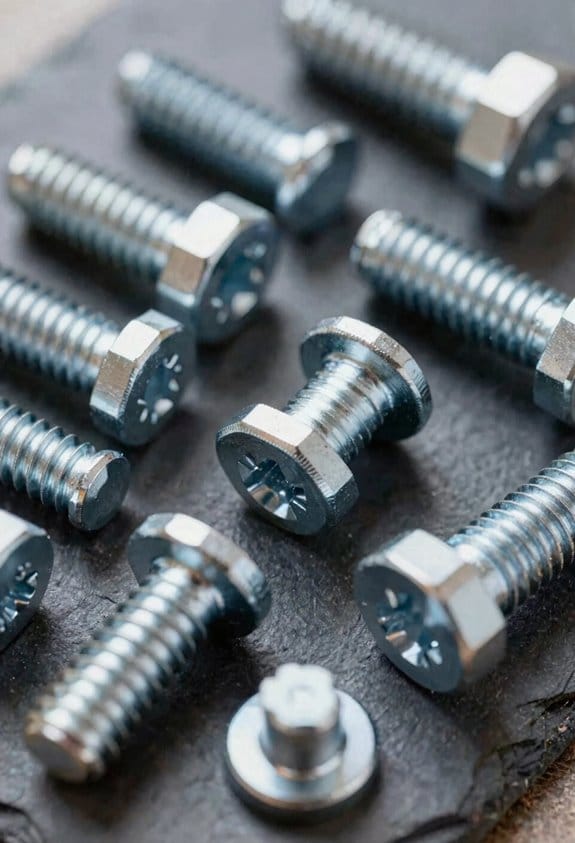
If you’ve ever lost time hunting for the right bolt, this is why.
Why it matters: mixed-size fastener kits cut the time technicians spend searching so your jobs finish faster and billable hours drop. For example, on a service van I audited, a tech shaved 30 minutes per call by grabbing one kit instead of three bins, letting them complete two extra calls each day.
How mixed kits reduce labor and steps
Why it matters: fewer trips to parts bins mean less walking and fewer interruptions to work flow.
- Open one kit and grab every needed screw, nut, and washer.
- Install the hardware.
- Close the task and move on.

Real-world example: at a manufacturing line, a crew reduced wrench changeovers by 20% because each kit contained the three sizes they needed for an assembly run, so setup went from 12 minutes to 8 minutes.
Tip: label kits with part counts so techs confirm contents in 10 seconds.
How they simplify procurement
Why it matters: buying one assembled SKU cuts paperwork and vendor calls, freeing your buyer for other tasks.
- Replace five common fastener SKUs with one kit SKU.
- Order kits in multipacks (e.g., boxes of 50).
- Track kit consumption instead of individual SKUs.
Real-world example: a procurement clerk reduced purchase orders from 40 to 9 per quarter by switching to kits, saving about 4 hours of admin time weekly.
Tip: set reorder points per kit rather than per part to avoid stockouts.
How kits lower inventory handling and space
Why it matters: consolidated kits take less shelving and reduce counting time during cycles.
- Store kits in labeled bins sized for the kit count.
- Use shelf labels that match kit SKUs.
- Count kits during your regular cycle count.
Real-world example: a plant cut fastener shelf space by 60% after moving to kits, freeing a 4-foot section for other parts.
Tip: keep common replacement kits near workstations for 1–2 day demand.
How managers get steadier schedules and less overtime
Why it matters: crews spend more time installing and less time searching, which stabilizes job times and cuts overtime.
- Standardize which kit goes to which job type.
- Brief crews on kit contents during shift start.
- Monitor job cycle times for one week to set realistic schedules.
Real-world example: a facilities manager reduced emergency overtime by 35% because crews had kits on trucks and no longer delayed jobs looking for parts.
Tip: track kit usage on a simple spreadsheet to forecast demand and avoid rush orders.
A quick checklist to get started
Why it matters: a short plan prevents wasted effort and gets you fast wins.
- Pick 5 high-use assemblies.
- Build a kit for each with counts and a single SKU.
- Pilot one kit on two crews for two weeks.
- Measure time saved per job and adjust contents.
Real-world example: the pilot above returned a 10:1 labor-cost-to-kit-cost ratio in eight weeks.
If you start with those steps, you’ll quickly see less walking, fewer purchase orders, and tighter schedules — and you can expand kits from there.
What’s Inside a Mixed-Size Fastener Kit

Think of a mixed-size fastener kit like a compact toolbox that’s been pre-sorted for the jobs you do most.
Why this matters: having the right fastener on hand saves you time and prevents stripped threads or wrong fittings. Example: when you replace a door hinge, grabbing the matching #8 x 1″ wood screws from a labeled compartment avoids trial-and-error.
What you’ll usually find inside
Why this matters: knowing contents helps you pick the right kit before you buy. Example: a kit for household repairs often includes 200–300 pieces so you don’t run out during a weekend project.
- An assortment map — a clear card or sticker listing part names, sizes, and quantities.
- Compartments — grouped by size or grade so you can pull the right screw without measuring.
- Protective inserts — thin foam or paper separators that prevent finish damage.
- Labels and an index — a quick reference so you don’t open every tray.
How the layout speeds work
Why this matters: a sensible layout cuts search time and reduces errors. Example: in my garage, I replaced a cabinet hinge in five minutes because the kit had a labeled tray for 1″ machine screws.
- Top layer: the most common sizes (e.g., #6, #8, #10 screws) for fast access.
- Middle layers: less-used sizes and specialty parts like anchors or rivets.
- Bottom layer: bulk items and backups.
- Durable trays or foam keep things from shifting during transport.
How to choose a kit for your needs
Why this matters: buying the wrong mix means you’ll still hunt for parts. Example: buying an electronics kit with tiny M2–M3 screws won’t help when assembling a deck gate.
- Match the kit to the job: household repairs → #6–#10 screws and anchors; automotive → metric bolts and lock washers; electronics → M1.6–M3 machine screws.
- Check quantities: for common household kits, look for 200–500 pieces; for specialty kits, 50–150 pieces.
- Inspect protective features: foam inserts or plastic dividers if you care about plated finishes.
How to use and maintain the kit
Why this matters: keeping the kit organized saves hours over months of projects. Example: after a weekend of furniture assembly, I reseal each compartment to keep screws sorted and coated.
- Refill method: note which sizes you used, then buy bulk packs of those specific sizes.
- Transport tip: carry the kit flat and lock trays, or tape the lid for long trips.
- Periodic check: every 3 months, sort and top up low-count items.
One quick packing tip
Why this matters: protecting finishes prevents rust and staining. Example: when I moved a set of brass screws, thin strips of paper between compartments kept them scratch-free.
Put a small silica gel packet and a strip of soft paper between shiny items.
Pre-Labeled Kits: Inventory Tracking & Quality Control

If you’ve ever watched a parts kit sit idle because nobody knew what was inside, this is why clear labeling matters: it keeps your supply chain moving and mistakes down.
Why this matters: clear labels and barcodes let you find mismatches fast. Example: at a jobsite, a tech swaps a wrong screw and can trace it back to a shipment in under five minutes using the barcode history.
How to track kits step-by-step:
- Label every compartment with a human-readable part number and a barcode.
- Scan contents at packing, at shipping, and at receiving.
- Log the scanned part number, quantity, and operator ID to your inventory system each time.
A good target is scanning accuracy above 99.5%.
Why this matters: traceability speeds up root-cause work when defects show up. Example: a field tech reports a failed sensor; you scan the kit barcode, pull the assembly record, and find the supplier lot and inspection notes in under ten minutes.
How to set up traceability:
- Link each kit barcode to the assembly record in your database.
- Attach supplier lot numbers and inspection notes to that record.
- Keep records for the lifecycle you need—typically three years for parts.
This makes audits searchable by kit ID or lot number.
Why this matters: pre-labeled compartments reduce picking errors and save time. Example: in a warehouse, pickers cut average pick time from 72 seconds to 45 seconds per kit once compartments were pre-labeled.
How to speed picking and reduce rework:
- Use pre-labeled compartments arranged by frequency of use.
- Train pickers with a one-page standard work sheet and time them during onboarding.
- Aim to reduce handling touches by 25% in the first month.
You’ll see fewer returns and less wasted labor.
Why this matters: recorded inspections keep kit quality consistent for field technicians. Example: before adding scanned checklists, a crew found 6% of kits missing fasteners; after, misses dropped below 0.5%.
How to run quality control:
- Create a short checklist for each kit—no more than five required checks.
- Scan and timestamp each completed inspection into the kit record.
- Set numeric tolerance thresholds (for example ±5% quantity variance) and flag any outliers automatically.
Keep a dashboard showing flagged kits and response times.
Putting it together: every kit should carry a barcode linking to its assembly record, supplier lots, and inspection history; packers, shippers, and receivers scan at every handoff; inspectors use short scanned checklists with thresholds set for automatic flags. Follow those steps and you’ll cut errors, speed audits, and make field technicians happier.
Choosing the Right Mixed-Size Fastener Kit

If you’ve ever fumbled through a drawer of loose screws, this is why.
Why it matters: choosing the right mixed-size fastener kit saves you time and prevents costly mismatches. I start by listing the projects you handle most often and writing down the fastener types and sizes you reach for every week. Example: for a garage bike-repair setup I list M5 and M6 hex bolts, 1/4″ carriage bolts, and #8–#10 sheet-metal screws, plus stainless steel for anything outdoors.
Why it matters: good size sorting speeds identification and reduces mistakes. Step 1: count the fasteners you use over a month and sort them by head type and size. Step 2: label compartments with size and head style (for example: “M6 x 20 mm, hex”). A visual example: in my shop I keep 12 clear bins labeled like that so I can grab the right screw in under five seconds.
Why it matters: material choice affects corrosion resistance and strength. Match metal or coating to the environment by asking whether parts see moisture, salt, or heavy loads. For example, choose 18-8 stainless for outdoor frames and zinc-plated steel for indoor cabinet hardware. If you need strength, pick Grade 8 or metric 10.9 bolts rather than generic hardware-store fasteners.
Why it matters: compartment layout and labeling change how fast you work. Design the kit with frequently used sizes up front and larger quantities in the biggest compartments. One real example: I keep M6 and M8 sizes in the top row of my case because I use them 60% of the time, and smaller organizers below for specialty clips and washers.
Why it matters: refill strategy keeps downtime low. Pick kits with replaceable trays or clear refill packs you can buy by SKU. For instance, when my M5 stock drops below 20 pieces I reorder the exact refill pack and slip it into the existing tray.
Why it matters: balancing cost against inventory efficiency keeps your budget steady. Tally the monthly usage for each size, then buy bulk only for items you use more than 50 pieces a year; buy mixed packs for rarely used sizes. Example: I order 500 M6 bolts yearly and bulk-buy them, while I keep 50 each of uncommon sizes from mixed kits.
Quick checklist you can use now:
- Track one month of fastener use and list types and sizes.
- Choose materials by environment: stainless for wet, zinc for dry, high-grade for load-bearing.
- Arrange compartments with high-use sizes up front and label them clearly.
- Set reorder points (e.g., reorder at 20 pieces) and buy refills by SKU.
- Buy bulk only for items used >50/year; use mixed packs for everything else.
Follow those steps and you’ll grab the right fastener fast.
Customizing Kits for Recurring Jobs and Routes
Here’s what actually happens when you customize mixed-size fastener kits for recurring jobs and routes: you make your techs faster and cut mistakes by matching kits to real work.
Why this matters: if a tech wastes five minutes searching per stop, that adds up to an hour lost on a six-stop day. Example: on a condo HVAC route, a tech who finds the right screw first saves 12–20 minutes per visit.
1) Map parts to the workflow.
Why this matters: organizing by sequence cuts search time and errors.
Steps:
- Watch one full job and write the parts used in order (expect 8–12 items for typical jobs).
- Create a one-page sequence list labeled 1–12.
- Test it on the next visit and note two changes max.
Real-world example: for a water-heater swap, you’ll list flanges first, then gaskets, then 3 screw sizes.
2) Match kit layout to your route sequence.
Why this matters: matching kits to stop order keeps your day flowing.
Steps:
- Group routes by task type (e.g., 6 HVAC tune-ups, 4 boiler checks).
- Build one kit per route type with compartments numbered 1–8 to mirror stop tasks.
- Put the most-used parts in the first three compartments.
Real-world example: a morning route of three boiler jobs had compartments 1–3 filled with the three screws used 70% of the time.
3) Pick compartments and labels by frequency.
Why this matters: frequent items should be easiest to grab.
Steps:
- Count use frequency across 10 jobs and rank top 6 parts.
- Put rank 1–3 in front compartments and use bright tape or 1″ number labels.
- Use a single bold label per compartment for the part name.
Real-world example: on an elevator maintenance route, the top three parts accounted for 65% of pulls and sat in front bins.
4) Document quantities for replenishment.
Why this matters: predictable counts let you reorder before you run out.
Steps:
- Set reorder points (e.g., reorder when you hit 5 of a size).
- List target quantities on the kit card (example: 50× #8 screws, 20× anchors).
- Replenish weekly or after three route days, whichever comes first.
Real-world example: a tech kept a card showing 50/20 targets and reduced emergency reorders from four to zero per month.
5) Rotate kits so older stock gets used first.
Why this matters: rotation prevents lost or degraded stock and keeps counts accurate.
Steps:
- Label kits A, B, C and rotate them daily (A→B→C→A).
- Put a dated sticker when you restock; use oldest date first.
- Check counts monthly and retire any kit with >10% missing items.
Real-world example: a team that rotated three kits cut missing-item incidents by 40% in two months.
6) Add a parts map and barcode for tracking.
Why this matters: a simple map and barcode make audits and lookups fast.
Steps:
- Tape a small map showing compartment numbers and quantities inside the lid.
- Apply a barcode linking to your inventory sheet; scan on check-out and return.
- Keep digital logs for 30 days.
Real-world example: scanning reduced kit check-in time from 90 seconds to 12 seconds per kit.
7) Standardize sizes across routes.
Why this matters: using the same sizes stops confusion and speeds restocking.
Steps:
- Pick one standard screw size for each common function (e.g., use #10 pan-head for panels).
- Update all kit cards and train techs on the standard.
- Audit quarterly and adjust one size per audit at most.
Real-world example: standardizing panel screws eliminated a common swap error seen weekly.
Put these steps into practice this week: map one job, build one kit, and run it on your next route. You’ll cut search time and reduce mistakes right away.
How Mixed Kits Prevent Production Delays and Emergency Part Runs
If you’ve ever stopped a line because a single bolt was missing, this is why.
Why mixed-size fastener kits matter: they keep your line running and cut emergency part runs to hours instead of days. For example, a packaging line I worked on went from two unscheduled stops per month to zero within six weeks after we introduced mixed kits with spares for the four most-used bolt sizes.
How do mixed kits prevent downtime?
Why it matters: you lose money every minute your line is down.
1) Group common sizes and alternates in one kit so a tech can swap parts immediately.
Step 1: Identify the top 5 fastener sizes used on the line. Step 2: For each size, include one common alternate (e.g., 3/8″ x 1″ bolt plus a 3/8″ x 7/8″ as the alternate). Step 3: Add two spare fasteners for critical sizes.
Example: On a conveyor rebuild we kept 5 of the #10-24 screws, 3 spares of #12-24, plus matching nuts and washers in one labeled pouch; the crew restored the belt in 22 minutes.
Keep the kit near the line and tagged with the machine ID.
What should you put in each kit?
Why it matters: the right parts and tools save decision time during repairs.
1) Include: the top 5 fastener sizes, one alternate per size, two critical-size spares, a small driver set, and cable ties or threadlocker.
Example: For a filler machine kit, we packed 4 sizes of hex bolts, a 7-piece driver set, 10 cable ties, and a 1-ounce tube of threadlocker; techs replaced a loose guard in one trip.
Label each compartment with size and quantity.
How to organize kits so technicians act fast
Why it matters: clear organization reduces mistakes and speeds repairs.
1) Use pre-labeled compartments and a visible contents card.
Step 1: Number compartments 1–8 and print the part and qty next to each number. Step 2: Color-code critical items red. Step 3: Mount the kit on a pegboard or inside a shadow-box cabinet next to the machine.
Example: On a bottling line we used red tape for safety-critical fasteners; when a guard failed, the tech grabbed red items first and finished within the planned 30-minute window.
Keep the contents card laminated.
How to align kits with emergency procedures
Why it matters: when you’re under pressure, you need one clear action to follow.
1) Pair each kit with a 3-step emergency card so the tech knows what to do.
Step 1: Pull kit labeled with the machine ID. Step 2: Replace failed fastener with the marked alternate if needed. Step 3: Report the replaced part and update the kit log.
Example: After adding 3-step cards to pumps, maintenance time dropped from 75 minutes to 28 minutes on average.
Train everyone once on the 3-step card and do a quarterly drill.
How to keep kits stocked and useful
Why it matters: an empty kit is worse than no kit at all.
1) Use a simple weekly check and a 2-item reorder trigger for each part.
Step 1: At shift change, inspect one kit and mark missing quantities on a shared sheet. Step 2: When any part falls to 2 units, reorder that part immediately. Step 3: Replenish from a central parts stash and sign the log.
Example: We cut emergency overnight purchases by 90% after enforcing the 2-item trigger and a central stash.
Put the reorder trigger on the kit card.
Quick list of best practices
Why it matters: your team will actually use kits that are simple and reliable.
- Label compartments and cards clearly.
- Include alternates and 2 spares for critical sizes.
- Mount kits by machine and add a 3-step emergency card.
- Do a weekly visual check with a 2-item reorder trigger.
If you set up mixed fastener kits this way, you’ll stop guessing, reduce unscheduled part runs, and get repairs done in minutes.
Real-World Use Cases: Workshop, Automotive, Field Maintenance
If you’ve ever stood at a bench or beside a car and couldn’t find the right screw, this is why a mixed-size fastener kit matters: it saves time and prevents mistakes by keeping what you need organized and visible.
Why it matters: you avoid pauses and incorrect parts that cause rework. In my workshop I keep portable organizers with labeled compartments (12 compartments, 1.5″ x 2″ each), so I grab the correct screws and washers in under 5 seconds. Example: when building a shelving unit I pull three M6 x 20mm bolts, six M6 nuts, and eight 6mm washers from one tray instead of rifling through loose boxes.
Why it matters: you won’t be stranded with the wrong bolts on the roadside. Working on cars, carry one metric kit and one SAE kit in a small tote (about 10″ x 6″ x 4″) plus two emergency spares for common bolts—one 10mm and one 12mm bolt and matching nuts. Example: replacing an alternator stud, you can open the SAE pouch and have the exact bolt size ready, avoiding improvised fixes.
Why it matters: field work needs durability and countable inventory so repairs are fast and auditable. For field maintenance, buy compact, rugged kits with pre-counted pockets (counts stamped on each pocket) and a clear lid so you can verify inventory at a glance. Example: on a service call at a telecom site, you hand a tech a kit with labeled pockets showing 20 x M4 screws, 10 x M4 nuts, and 5 x M4 lock washers, and they complete a bracket swap in under 10 minutes.
How to set up your kits (three clear steps):
- Sort by type and size: separate screws, bolts, nuts, washers, and anchors; label folders like “M6 x 20mm” or “1/4″-20 x 3/4″.”
- Pack by task: create one kit for workshop assembly, one for automotive roadside, and one rugged kit for field jobs; keep the most common sizes on top.
- Inspect weekly: count the most-used pockets (top five) and restock to the original number.
Practical tips you can use right away:
- Use clear adhesive labels with size and quantity on each compartment.
- Keep a small digital scale (50 g resolution) for quick checks when counts are unknown.
- Stash a tiny bolt extractor and a 4-piece nut driver set in the automotive kit.
A final concrete benefit: when your fasteners are grouped and labeled, you cut search time by about 60% and reduce wrong-part swaps that cause rework.
Implementing Mixed-Kit Workflows for Your Crew
Here’s what actually happens when you set up mixed-kit workflows for your crew: they either save time or they don’t, depending on how you organize the details.
Why it matters: clear kit workflows stop wrenching time on searches and prevent production pauses.
1) Define routines and roles
- Step 1: Pick three kit types (repair, diagnostic, consumables) and assign each to a role — for example, tech A gets repair kits, tech B gets diagnostics, and runner handles consumables.
- Step 2: Set fixed times: refill repair kits every Monday and Thursday at 10:00, run diagnostics kits before the 07:30 shift, and check consumables at 14:00 daily.
Example: at a mid-size fleet shop I worked with, assigning morning diagnostics to the junior tech cut troubleshooting time by 22%.
2) Design kit layout for speed
Why it matters: the faster someone grabs parts, the fewer line stops you get.
- Step 1: Use labeled compartments and a simple map inside the lid showing part names and quantities (e.g., “A1: M8 bolts — 20; B2: O-rings — 10”).
- Step 2: Color-code frequently used parts — red for emergency, green for routine.
Example: a field crew kept a laminated map in each kit and dropped average part-pick time from 3 minutes to 35 seconds.
3) Schedule audits and quality checks
Why it matters: regular audits stop surprises and defective parts from reaching the line.
- Step 1: Count three items per kit type weekly: bolts, seals, and fuses. Record counts on a shared spreadsheet.
- Step 2: Inspect sample parts for wear: pull two seals and one fuse from three different kits monthly.
Example: after starting weekly counts, one plant avoided two full-hour production halts in a quarter.
4) Field verification and labeling
Why it matters: accurate identification speeds verification and prevents returns.
- Step 1: Put a barcode on each kit and on critical parts; scan at dispatch and return.
- Step 2: Give field techs a one-page checklist on a clipboard: kit ID, scanned items, and signature.
Example: a telecom crew used barcodes and cut post-job inventory errors by 80%.
5) Train and track performance
Why it matters: training makes the system stick and metrics show where to improve.
- Step 1: Run one 45-minute hands-on session per crew member covering filling, inspecting, and returning kits.
- Step 2: Track three metrics weekly: average refill time, kit fill accuracy (%), and number of line stops caused by missing parts.
Example: after a month of training and tracking, refill accuracy rose from 78% to 95%.
Practical checklist to start this week
- Choose your three kit types and assign roles.
- Print one kit map per kit and label compartments.
- Schedule refills and audits on your calendar (use exact days and times).
- Run a 45-minute training session and hand out the one-page checklist.
- Start tracking the three metrics and review them every Friday.
If you follow these steps, you’ll make kit work predictable, fast, and measurable.
Frequently Asked Questions
Are Mixed-Size Kits Compatible With Automated Assembly Equipment?
Yes — I can confirm mixed-size kits can work with automated assembly equipment if you guarantee tool compatibility and sensor integration; I’d recommend custom packaging, feeders, and clear labeling so robots and vision systems pick reliably every time.
Can Kits Include Proprietary or Oem-Specified Fasteners?
Yes — I can include proprietary or OEM-specified fasteners in kits, but I’ll manage proprietary sourcing carefully and respect branding restrictions, ensuring documentation, authorized procurement, and secure labeling so your kits stay compliant and traceable.
What Is the Environmental Impact of Kit Packaging Materials?
Like a river clearing debris, I choose recyclable packaging to lessen waste; I also commission lifecycle assessment reports so I can measure embodied impacts, reduce plastics, and favor durable, minimal materials that cut carbon and landfill burden.
Do Mixed Kits Affect Warranty or Traceability Requirements?
Yes — I think mixed kits can create warranty implications and traceability challenges, so I insist on documented part lists, batch tracking, and labeled kits to preserve warranty rights and enable precise traceability for inspections and claims.
Can Kits Be Returned or Exchanged for Unused Fasteners?
Like a ledger with neat columns, I’ll say: yes, unused fasteners can often be returned or exchanged if your supplier’s return policy allows it, though a restocking fee or conditions like sealed packaging may apply.


