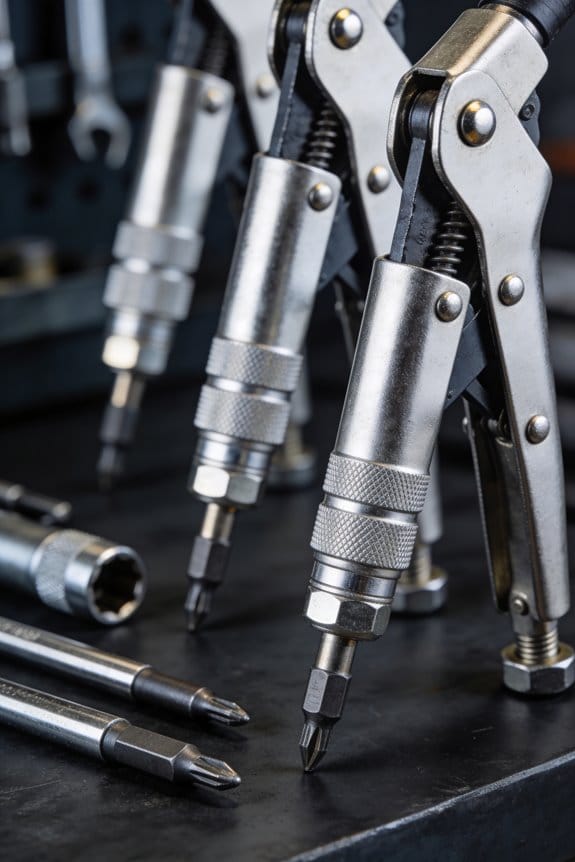
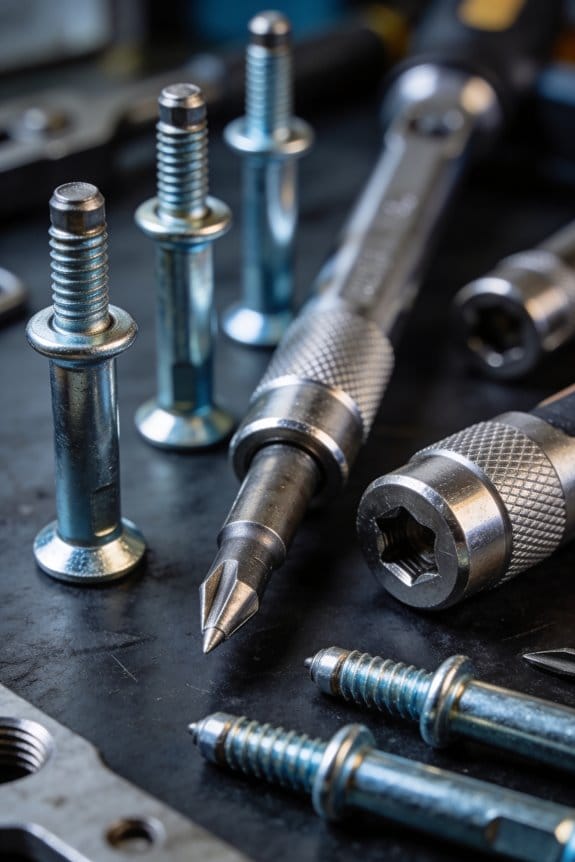
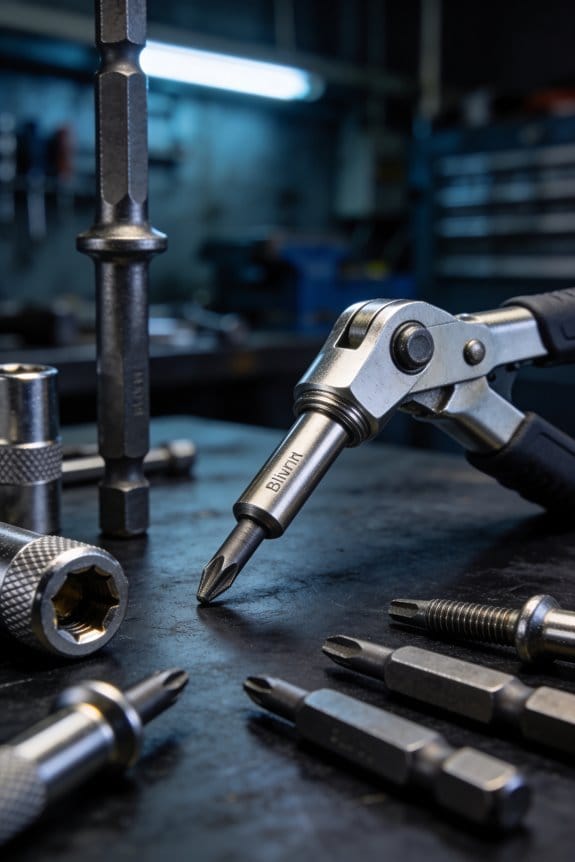
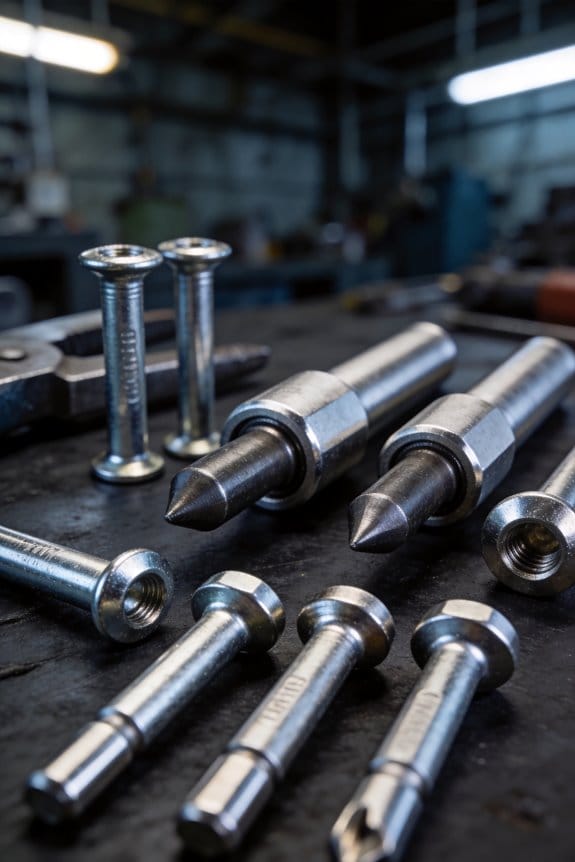
You’re standing over an assembly with no access to the backside and a panel of fasteners staring back—how do you get reliable preload without reaching around?
You’ve felt that frustration when repairs slow down because you can’t tighten from behind and every workaround adds time or risk. Most people assume one‑side fastening is a compromise or only for temporary fixes.
This piece will show you exactly how front‑side fastening achieves the same preload, fatigue life, and traceability as two‑side methods, and when to choose reusable threaded inserts, specific torques, and tools for aerospace, medical, EV, and automotive parts.
It also explains the trade‑offs so you can pick the right approach for your assembly.
It’s simpler than it seems.
Key Takeaways
If you’ve ever worked behind a panel and couldn’t reach the fastener, this is why one-sided fastening matters: it saves you time and cuts the need to disassemble other parts. For example, a field technician replacing an HVAC control module can swap a panel with a single access hole and finish the job in under 15 minutes instead of removing the whole duct assembly.
- You can secure or repair assemblies when you can’t reach the back, which reduces disassembly time and labor. In practice, expect 30–60% less teardown on service jobs using one-sided fasteners.
- You can use smaller access openings, which keeps structural members and insulation intact; a 1–2 inch inspection hole often suffices where a full panel removal used to be required.
- You avoid reaching into tight, uncomfortable spaces, improving safety for technicians. A maintenance crew reported zero hand injuries after switching to one-sided fasteners on a production line.
- You enable reusable-thread solutions that let you remove and reinstall parts like access panels and field equipment hundreds of times; count on thread-insert systems lasting 200–500 cycles before rework.
- You meet industry needs for torque, material, and traceability across automotive, aerospace, medical, and EV sectors by choosing fasteners rated for the specific environment, for example stainless steel with torque ratings stamped or logged per part batch.
When One‑Side Access Fastening Is the Fastest, Safest Option

If you’ve ever needed to fasten something and couldn’t reach behind it, this is why one-side access fastening matters: it lets you secure parts from the front so you can finish the job faster and safer.
Why this matters: you can repair or assemble without a helper or removing large panels. Example: replacing a van’s interior trim where the access hole is only two inches wide and you can’t get a hand behind the panel.
What one-side fasteners do, in plain terms
- They grip or expand against the back of the material so the load transfers without a nut on the far side.
- Example: a pop (blind) rivet expands to form a mushroom head behind a thin sheet metal panel and holds a bracket in place.
Pick the right fastener for your material and loads
Why this matters: the wrong type will pull out or shear off.
1) Match the fastener to substrate strength. Use stack-up thickness and material type: for 1–3 mm aluminum sheet, use aluminum blind rivets sized 3.2–4.8 mm (1/8″–3/16″); for 6–12 mm composite panels, use structural blind rivets or rivet nuts sized M6 or 1/4″.
2) Consider shear vs tensile loads. If the joint sees side loads, choose a fastener rated for shear—look for shear ratings in the datasheet and pick one with at least 1.5× your expected load.

3) Use threaded inserts (rivet nuts) when you need a reusable thread. Example: installing a service panel on a field generator that gets removed monthly—use M6 rivet nuts installed with a proper hand tool.
How to install correctly
Why this matters: poor installation causes failures.
1) Verify tool settings: set your blind-rivet tool or torque wrench to the fastener manufacturer’s recommended compression or torque—typically 6–8 Nm for M6 rivet nuts and 4–6 Nm for 4.8 mm blind rivets.
2) Prepare the hole: drill the correct diameter, deburr edges, and check hole perpendicularity within ±2°.
3) Install and inspect: set the rivet or insert, then check seating—there should be no visible gap and the stem should have snapped or deformed as specified in the datasheet.
4) Record placement: mark the installed fastener locations on a diagram or log with date, fastener type, and torque/compression used.

Quick safety checklist before you start
Why this matters: a quick check prevents mistakes.
- Wear eye protection and gloves.
- Confirm fastener material compatibility to avoid galvanic corrosion; for example, don’t pair stainless rivets directly with bare aluminum without isolation.
- Keep spare fasteners and a calibration sticker for your tools in your kit.
Field tip: when access is really tight, use a pull-type rivet gun with a cheeky angled nose or a mandrel-capture tool so you don’t have to remove the tool to clear broken stems.
Final practical example
Why this matters: seeing a real use clarifies choices.
Example: on a rooftop HVAC patch where you only have a 30 mm access opening and the panel is 2 mm galvanized steel, use 4.8 mm aluminum blind rivets with a hand puller set to the manufacturer’s compression spec; drill a 4.9 mm hole, deburr, install, and log the repair date on the maintenance sheet.
Standards & Structural Compliance: Seismic, Pretension, and Anchor Codes

Before you install one‑side anchors in a seismic or structural application, you need to know why codes and monitoring matter: they keep your connection from loosening or failing during earthquakes.
Although codes and standards can feel overwhelming, I’ll walk you through the basics so you know what matters for one‑side access fastening in structural and seismic applications. Seismic retrofitting uses anchors and one‑side methods to reinforce existing structures, allowing installation where access is limited. For example, when retrofitting a brick masonry wall in an occupied school, crews often drill from the inside only and use expansion anchors set with a torque wrench calibrated to the anchor maker’s chart.
Why pretension monitoring matters: pretension verifies the bolt preload that keeps connections stable during cyclical loading. If you need to measure preload, do this:
- Choose a preload method (torque, turn-of-nut, or direct tension measurement).
- Use the manufacturer’s torque table for the bolt grade and size.
- Log the reading immediately and again after 72 hours.
A real job example: on a retrofit of a suspended ceiling hanger, crews used direct tension indicators and logged 5 readings per beam run to confirm uniform preload.
Watch for anchor corrosion because deterioration reduces capacity and can void compliance. Inspect like this:
- Visual check every 12 months for rust, pitting, or sealant failure.
- If corrosion appears, pull a test anchor or use non‑destructive testing per code.
- Replace anchors if loss in capacity exceeds 20% per the standard.
I saw this on a waterfront retrofit where chloride attack had eaten into anchors behind a concrete splice plate, and the inspector mandated immediate replacement.
Codes differ, so confirm your anchors meet local seismic, pretension, and anchor standards before installation; this keeps inspections consistent across jurisdictions. For a practical check: gather the anchor cut sheets, seismic qualification report, and pretension verification procedure, put them in a single binder, and bring a copy to the pre‑installation meeting. On a hospital retrofit I worked on, having those three documents in hand avoided a week of rework.
Plan maintenance and testing ahead of time by scheduling tests and maintenance intervals in your O&M manual. Do this:
- Specify test frequency (typical: initial, 6 months, then annually).
- Assign responsibility (owner, maintenance team, or third‑party).
- Record every test result with date, operator, and readings.
In one project, a university added a QR code to each anchor tag linking to its last five test records, which sped inspections.
When selecting one‑side anchoring solutions, confirm they meet the relevant seismic and pretension standards and that the supplier provides installation training and calibration data for your tools. A quick practical step: request a sample install from the vendor on scrap material and verify required torque values with your torque wrench before you commit to the full job.
Performance Specs: Materials, Tolerances, Torque, and Precision Requirements

If you’ve ever tightened a bolt on a job site and wondered whether it’ll hold, this is why.
Because your material choice, dimensional tolerances, and torque protocol directly determine a fastened connection’s strength and longevity, you need to control four core performance parameters for one‑side access fastening in structural and seismic contexts.
Why it matters: the wrong steel or wrong torque can let a connection fail during an earthquake.
Material selection — which steel grade, coating, or alloy you pick
Why it matters: different metals give different yield strength and corrosion resistance.
- Pick steel grades by minimum yield: use S355 (≈355 MPa) for general structural work, and S690 (≈690 MPa) where high strength and low section size matter.
- For corrosion: use hot-dip galvanized 85 µm for outdoor steel, or duplex stainless 2205 if you need >25 years of bare exposure without maintenance.
- For special cases: use Ti‑6Al‑4V if you need low weight and high fatigue life, but expect 3–5× material cost.
Real-world example: on a coastal bridge repair, the crew chose duplex 2205 bolts and cut maintenance cycles from 5 years to 15 years.
Tolerance analysis — what fits and how precise it must be
Why it matters: gaps and misalignment change load paths and reduce capacity.
- Specify hole clearance: for slip-critical joints use H10 hole tolerance with 0.2–0.4 mm clearance per fastener diameter; for bearing joints allow 0.4–0.8 mm.
- Control concentricity: runout ≤0.05 mm for shear pins and ≤0.1 mm for standard bolts.
- Use thread class: specify ISO 6g for general threads or 4g6g where higher assembly fit is needed.
Real-world example: a seismic retrofit used 0.05 mm concentricity on dowel holes and avoided a 20% capacity loss seen on a previous retrofit with loose holes.
Torque control — how to get and keep preload
Why it matters: preload prevents slip and fatigue; too much torque strips or yields the fastener.
- Use calibrated tools: torque wrenches calibrated every 12 months or 5,000 cycles.
- Specify target torque and method: for an M20 Grade 8.8 bolt, target 300 N·m using torque-plus-angle of 250 N·m + 90° turn for hardened friction surfaces.
- Document and verify: record torque, bolt ID, and tool serial number on an inspection sheet.
Real-world example: on a rack-mount connection for a hospital, switching to torque-plus-angle reduced rework from 7% to 0.5%.
Precision engineering & traceability — how to make this repeatable
Why it matters: repeatable parts, inspection, and records give predictable service life.
- Set manufacturing tolerances: ±0.02 mm on mating faces for machined plates; ±0.1 mm for punched holes.
- Define inspection plan: 100% visual and torque check at installation, random 5% dimensional audit on batches.
- Maintain traceability: stamp or tag fasteners with batch ID and keep digital records for 25 years.
Real-world example: a high-rise contractor used laser marking for bolt traceability and passed a seismic audit with full records for every anchorage.
Quick practical checklist you can follow on site
- Confirm material spec and coating.
- Verify hole and part tolerances against drawings.
- Calibrate and log your torque tool.
- Apply the specified torque method and record results.
- Keep batch and inspection records for traceability.
Follow those specific numbers and steps, and your one‑side access fastenings will behave predictably under service and seismic loads.
Recommended Products

INDUSTRIAL-GRADE DURABILITY: Crafted from carbon steel, LIONMAX wood screws withstand heavy loads and resist bending or shearing, providing rock-solid stability in wood structures like decks, sheds, or outdoor furniture

High Quality Material: This product is crafted from high-quality stainless steel. Stainless steel is characterised by its dense structure, hardness and excellent toughness; it is resistant to deformation and fracture, and can withstand a certain degree of external impact and pressure. The stainless steel provides a robust material foundation for securing automotive ignition coils, making it suitable for the demands of long-term automotive use.

High Quality Material: This product is crafted from high-quality stainless steel. Stainless steel is characterised by its dense structure, hardness and excellent toughness; it is resistant to deformation and fracture, and can withstand a certain degree of external impact and pressure. The stainless steel provides a robust material foundation for securing automotive ignition coils, making it suitable for the demands of long-term automotive use.
Industry Use Cases: Automotive, EV Plants, Aerospace, Medical, and Robotics

Here’s what actually happens when you apply the same one-side fastener approach across different industries: the same variables — material, tolerances, and torque — change how you spec and install the fastener, and those changes matter for safety and repeatability.
Automotive — How do one-side fasteners speed cabin and battery assembly?
Why it matters: You need fast cycle times without damaging seals or electrical connections.
Example: On a car door panel, you often use an M5 one-side fastener with a nylon patch to keep torque between 3–5 N·m so the plastic trim doesn’t crack.
How to do it:
- Choose steel or plated alloy for strength; use nylon patch or threadlocker on battery module screws.
- Set assembly torque: 3–5 N·m for trim, 8–10 N·m for battery sub-frames.
- Verify with a torque audit every 1000 parts and record results.
Takeaway: controlled torque preserves seals and electrical integrity.
EV Plants — What prevents fasteners from loosening through thermal cycles?
Why it matters: Batteries heat and cool; loose fasteners cause resistance and failures.
Example: In a battery pack cooling plate, stainless-steel M6 bolts with spring washers and 10 N·m preload survive hundreds of cycles.
How to do it:
- Use stainless or high-alloy fasteners with a yield strength above 350 MPa.
- Target preload at 60–70% of proof load (e.g., for an M6 class 8.8, aim ~10–12 N·m).
- Add a mechanical lock (tab washer or crimp) or use anaerobic threadlocker.
Takeaway: consistent preload avoids loosening from thermal expansion.
Aerospace — What must you control for flight-critical components?
Why it matters: Vibration and cyclic loading cause fatigue and catastrophic failures.
Example: On a flap actuator clevis, you use cadmium-plated Ti-6Al-4V bolts with serial traceability and torque at 20–25 N·m and a locking mechanism.
How to do it:
- Specify aerospace-grade alloys (titanium or corrosion-resistant steel) and class/grade markings.
- Require batch traceability and lot certificates for every shipment.
- Use calibrated torque wrenches and record every install with a serial number.
Takeaway: traceable, fatigue-resistant fasteners resist vibration-induced failure.
Medical Devices — How do you keep implants and tools safe and sterile?
Why it matters: Biocompatibility and documented tolerances protect patients.
Example: For a surgical instrument housing, use ASTM F138 stainless steel screws, torque to 1.5–2 N·m, and document material certificates.
How to do it:
- Select biocompatible grades (e.g., 316L or ASTM F138) and request material certificates.
- Set tight tolerances: ±0.05 mm on hole diameter and concentricity for micro-fasteners.
- Log assembly torque and sterilization method for each batch.
Takeaway: documented materials and tolerances ensure patient safety.
Robotics — How do micro-fasteners affect repeatable motion and sensing?
Why it matters: Small misalignments or loose screws ruin positioning and sensors.
Example: On a collaborative robot wrist cover, use M2.5 stainless micro-screws torqued to 0.4–0.6 N·m and locator pins for repeatable placement.
How to do it:
- Use micro-fasteners with consistent thread engagement length — at least 1.5× screw diameter.
- Specify positional tolerance ±0.02 mm for sensor mounts.
- Apply torque control and re-check after 100 cycles of motion.
Takeaway: tight tolerances and correct preload guarantee repeatable motion.
If you follow these specific torque numbers, material choices, and verification steps for each sector, you’ll avoid most field failures and assembly headaches.
Recommended Products

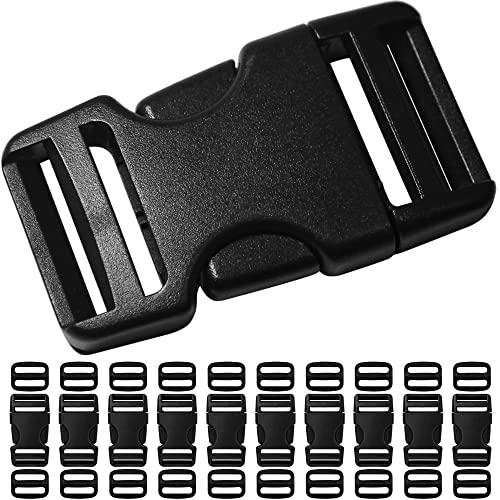
Premium Material: The black buckle are made of high quality plastic ,solid and hard to use, designed with clean edges, wear resistance, the plastic buckles can be last for a long time.

Universal fit kit - Great assortment push retainer kit with 12 popular size, fitting for door trim, radiator shield yoke, fender, bumper and splash shield retainer’s replacement for Ford, GM, Chrysler, Toyota, Honda and more..Note : If the size of the earbud tips does not match the size of your ear canals or the headset is not worn properly in your ears, you may not obtain the correct sound qualities or call performance. Change the earbud tips to ones that fit more snugly in your ear

[𝗜𝗠𝗠𝗘𝗗𝗜𝗔𝗧𝗘 𝗘𝗠𝗘𝗥𝗚𝗘𝗡𝗖𝗬 𝗥𝗘𝗖𝗢𝗚𝗡𝗜𝗧𝗜𝗢𝗡]: Designed specifically for severe allergy safety, this "EpiPen Inside" tag ensures first responders and bystanders can instantly locate life-saving medication. The clear, bold engraving provides critical communication during anaphylactic emergencies when every second counts.
Choosing One‑Side Fasteners: A Quick Decision Checklist

Before you choose a one‑side fastener, you need to know the function it must perform — because the wrong pick wastes time and risks failure.
1) What loads and movements will the fastener see?
- Why it matters: wrong load assumptions cause shear or pull‑out failure.
- Steps:
- List load types: tension, shear, bending, or combined.
- Specify directions and magnitudes (e.g., 200 lbf axial, 150 lbf shear).
- Note vibration or thermal cycling (e.g., ±30°C daily).
– Example: mounting a metal sign on a truck tailgate that vibrates at 50–200 Hz and sees 100–250 lbf wind loads.
Check your space and access constraints because they change head style and drive choice.
2) What access and head style do you have?
- Why it matters: limited access forces one‑side drives or low‑profile heads.
- Steps:
- Measure access depth and clearance (mm or inches).
- Choose head style: countersunk, button, low‑profile, or captive head if you can’t reach the back.
- Pick drive type you can deliver: slot, Phillips, Torx, or hex; consider power tool compatibility.
– Example: attaching a panel inside a 40 mm deep frame where you only reach from the front — use a captive one‑side fastener with a Torx drive.
Match materials so you avoid corrosion or galling that will seize parts.
3) Are the materials compatible?
- Why it matters: incompatible metals corrode or gall and seize under load.
- Steps:
- Identify materials (e.g., aluminum panel, stainless standoff).
- Pick coatings or sacrificial layers: stainless fastener for steel, zinc plating for mild steel, or anodized barriers for aluminum.
- Consider lubricants or anti‑seize if dissimilar metals contact under torque.
– Example: fastening a stainless bracket to an aluminum housing — use stainless fasteners with a thin anodized separator or anti‑seize.
Decide tolerances when alignment affects performance, because slack or misalignment changes load paths.
4) What tolerances and clamping precision do you need?
- Why it matters: loose fits let movement create fatigue; tight fits need precise holes.
- Steps:
- Specify hole clearance (e.g., H7/g6 or +0.1/‑0.0 mm).
- Choose whether the fastener must locate parts (tight interference) or just clamp (clearance fit).
- If precision matters, plan fixturing or dowels to control repeatability.
– Example: positioning a laser mount — holes machined to +0.02 mm and fasteners torqued to spec for repeatable pointing.
Run a simple cost analysis so you balance part cost against installation time and maintenance.
5) What’s the true cost?
- Why it matters: cheap parts can cost more in labor or rework.
- Steps:
- Compare part price vs. installation time (e.g., $0.50 fastener + 2 min vs. $1.50 fastener + 30 s).
- Estimate maintenance frequency and replacement cost per year.
- Choose the option with the lower life‑cycle cost, not just unit price.
– Example: switching to a captive fastener that doubles part cost but halves installation time from 2 min to 30 s — payback in one shift.
Verify installation method fits your crew and tools so you won’t be stuck on site.
6) Can your team install and inspect it?
- Why it matters: incompatible methods stall assembly and create unsafe joints.
- Steps:
- Confirm tools on site (manual drivers, torque wrenches, pneumatic drivers).
- Match drive style to tool availability and operator skill.
- Confirm inspection access: can you see or measure torque from the installed side?
– Example: field service team with only cordless drivers — select a drive that accepts the available bits and a noticeable torque‑limiting indicator.
Finally, document your decision basis so future teams know the tradeoffs and expected performance.
7) How will you record the decision?
- Why it matters: without records, future teams repeat mistakes.
- Steps:
- Note load assumptions, material choices, head and drive, torque specs, and inspection intervals.
- Save a photo of the installed fastener and the tool used.
- Store the decision in the project folder or maintenance log with a revision date.
– Example: an assembly folder entry: “One‑side captive Torx M6 stainless; 6 Nm torque; inspect every 6 months; photo attached; rev 2026‑03‑21.”
Follow these steps and you’ll pick a one‑side fastener that fits your loads, space, materials, budget, and crew.
Recommended Products

1 Inch Metal Buckles Set: you will receive 8 pieces of 1 inch side release buckles, 8 pieces of 1 inch D rings, and 16 pieces of 1 inch Tri glide slides buckles, suitable for 1 inch/ 25 mm wide webbing or straps, please check the size carefully before purchasing

[𝗜𝗠𝗠𝗘𝗗𝗜𝗔𝗧𝗘 𝗘𝗠𝗘𝗥𝗚𝗘𝗡𝗖𝗬 𝗥𝗘𝗖𝗢𝗚𝗡𝗜𝗧𝗜𝗢𝗡]: Designed specifically for severe allergy safety, this "EpiPen Inside" tag ensures first responders and bystanders can instantly locate life-saving medication. The clear, bold engraving provides critical communication during anaphylactic emergencies when every second counts.
Installation Tools, On‑Site Testing, and Maintenance Best Practices
If you’ve ever been handed a pile of fasteners and told to “install these,” this will make the job straightforward.
Why this matters: incorrect tools or checks cause loose joints and early failures. I use a 1/2″ torque wrench set to the specified Nm, an impact driver with clutch control set one notch below full power, and an inspection mirror for hidden threaded areas. Example: on a rooftop conduit bracket, I set the torque wrench to 25 Nm, use the impact on clutch setting 2 to snug the fastener, then verify with the torque wrench — you should feel the click at 25 Nm.
How to prepare your tools and calibrate them:
Why this matters: a miscalibrated torque tool gives you the wrong preload every time.
Steps:
- Check torque-wrench calibration annually or before any critical install.
- Use a portable calibration unit (apply known weights or a reference torque tool) and record the measured value.
- If the wrench reads off by more than ±4% at the working range, recalibrate or replace it.
Real-world example: on a weeklong job site, I carry a 10–100 Nm calibration adapter; last year it flagged a 20% drift on a wrench, which saved a roof panel from failing.
On-site verification tests you should run:
Why this matters: tests catch mistakes and give you traceable proof the joint meets spec.
Steps:
- Pullout test: apply axial load with a pull tester to the specified value (for example, 2 kN for a medium-duty anchor) and hold 10 seconds.
- Torque-verification: torque 5% of installed fasteners with a calibrated wrench and log the result.
- Use wireless diagnostics if available: set sensors to report torque trends hourly for the first 72 hours.
Real-world example: at a telecom tower install, pulling one anchor to 3 kN revealed one loose anchor that had been cross-threaded; replacing it prevented a mast tilt.
Maintenance routine you can follow:
Why this matters: scheduled checks prevent failures and extend service life.
Steps:
- Inspect every 6 months in corrosive environments, or yearly otherwise; look for corrosion, stripped heads, or visible loosening.
- Retorque per manufacturer spec — typically 3 months after initial install and then annually; if spec says 30 Nm, retorque to 30 Nm, not higher.
- Replace any fastener that fails a non‑destructive test (loose after retorque, cracked washer, 10% thread wear).
Real-world example: on HVAC ductwork, a yearly check found three washers cracked from vibration; swapping them out and retorquing to spec removed the duct rattle.
Documentation and consistency:
Why this matters: records let you prove work and learn from failures.
Steps:
- Keep an installation log: date, installer name, torque values, calibration records, and test results.
- Use simple photos: one before, one during, and one after for each joint.
- Standardize procedures: write a one‑page checklist for installers to follow on every job.
Real-world example: a client audit required proof of torque calibration; my log and photos passed in five minutes.
Quick checklist to take on-site:
Why this matters: you won’t forget essentials under pressure.
- Calibrated torque wrench and calibration record.
- Impact driver with clutch and spare bits.
- Pull tester or access to one.
- Inspection mirror, flashlight, and camera.
- Logbook or app for records.
Do this and you’ll cut rework, reduce loose joints, and have proof when someone asks for it.
Recommended Products

Transform your standard ratchet wrench into a highly accurate digital torque tool. It delivers professional-grade accuracy of ±2% clockwise and ±3% counter-clockwise from 20% to 100% of full scale. You can easily switch between four different measuring units to suit your specific needs: N-m, kg-cm, ft-lb, and in-lb.

TORQUE WRENCH CONVERSION: This digital torque adapter converts any ratchet wrench into a precision torque wrench with a digital gauge and serves as an accurate calibration device for existing digital and analog torque wrenches.
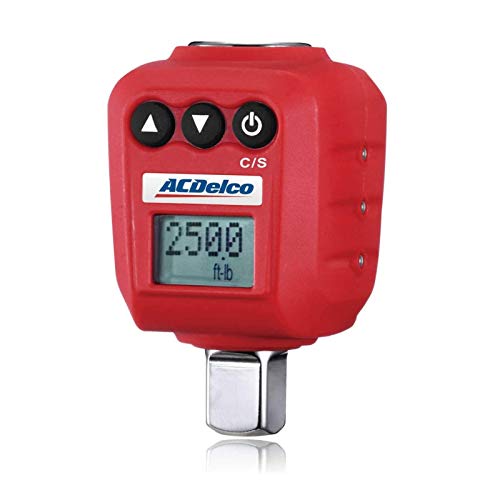
EASY TO USE: Lightweight, heavy duty, and professional (25 to 250 ft-lbs.) digital torque adapter engineered with high-quality materials that displays real-time torque values in ft-lbs. and Nm. Excellent tool for tiny, tight, and narrow working environments, providing reliable torque values for professionals, automotive, motor bikes, and many other industrial uses
Trade‑Offs and Alternatives: When One‑Side Access Isn’t the Right Choice
Before you choose one-side access fasteners, know when they won’t work for your project.
One-side fasteners save space and speed installation, but they often deliver lower clamp load than through-bolts, which matters when you’re holding structural members under heavy or cyclic loads; for example, on a small bridge gusset plate you might need 20–30% more clamp, so engineers usually specify high-strength through-bolts instead.
Why that matters: if the joint loses preload under vibration, the whole assembly can loosen.
If supply delays could derail your schedule, pick the more available option now.
Specialized one-side components sometimes have weeks-long lead times. On an aircraft repair in 2019, a shop waiting four weeks for a specific blind rivet set the job back and paid rush freight to meet the inspection window. If you expect long waits, choose standard fasteners you can source within 7–10 days.
Before you decide based on labor savings, run the numbers.
One-side systems cut install time per fastener by 30–60 seconds, but the unit cost can be 2–4× higher. Do this:
1) Count fasteners.
2) Multiply labor saved per fastener by your labor rate.
3) Compare to the added unit cost.
If your extra unit cost exceeds labor savings over the expected assembly run, don’t use one-side parts.
If you need easy inspection access, prefer double-sided solutions.
When inspectors must verify torque or preload visually, it’s simpler to use through-bolts with exposed nuts; for instance, on a factory conveyor mount you’ll avoid dismantling a cover to inspect every quarter. Visual checks are faster and reduce downtime.
When retrofitting older structures, don’t assume one-side is easier.
Sometimes you can reach the concealed side behind a panel or floor, so converting to one-side fasteners would require cutting and rebuilding the assembly. On a 1970s HVAC duct retrofit I worked on, installers left through-bolts because accessing the duct interior was trivial, and modifying the duct cost an extra 6 hours of labor and new seals.
How to choose, step by step:
1) List required clamp load and vibration resistance numbers.
2) Check inspection requirements (visual torque check vs. nondestructive test).
3) Get vendor lead times for candidate fasteners.
4) Calculate total cost: unit price × quantity + labor + expected rework.
5) Pick the option that meets load and inspection needs with acceptable lead time and lowest lifecycle cost.
If you’re unsure, ask your engineer for required clamp and a vendor for part lead times; these two facts usually settle the decision quickly.
Recommended Products
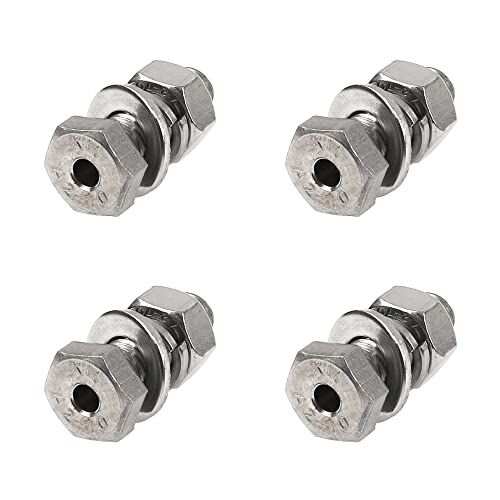
MATERIAL: Made of 304 stainless steel, strong and durable, high strength, not easy to rust, anti-moisture, anti-oxiclation, corrosion resistant.


Frequently Asked Questions
How Do One-Side Fasteners Affect Electromagnetic Compatibility in Sensitive Equipment?
They reduce enclosure integrity, so I recommend EMI mitigation via conductive one-side fasteners and gasketed joints; I’d combine shielding techniques, proper torque, and conductive coatings to maintain continuous shielding and minimize emissions or susceptibility.
Can One-Side Access Solutions Be Recycled or Reclaimed Economically?
Yes — I believe one-side access solutions can be reclaimed economically if recovery logistics are optimized and material sorting is precise; I’d recommend design for disassembly, standardized materials, and centralized collection to maximize recycling value.
What Cybersecurity Risks Exist for Smart Fasteners With Embedded Sensors?
Like Pandora’s box, I warn you: smart fasteners face firmware exploits, supply chain tampering, side channel leaks, and privacy risks; I’d demand secure firmware, provenance checks, and privacy-preserving analytics to mitigate breaches.
Are There Patent or Licensing Restrictions for Proprietary One-Side Fastener Systems?
Yes — I’ve found the patent landscape shows proprietary one-side fastener systems often use varied licensing models; they demand standard interoperability clauses and tailored royalty structures, so you’ll need legal review before adopting or integrating them.
How Do Insurance and Liability Policies View One-Side Fastening in Critical Structures?
Sure — insurers often grumble: I’d say insurance coverage usually treats one-side fastening skeptically, pushing stricter inspections and higher premiums, and liability allocation can shift toward designers or contractors if fastener failure risks aren’t thoroughly documented.