You tighten a deck screw, step back, and see fresh rust blooming around the head within weeks — why did a new fastener fail so quickly?
You’ve stared at stained timber and wondered whether the metal, the coating, or the environment caused the problem.
Most people assume any galvanized or stainless part will last and skip matching metal and coating to exposure.
This article shows which metals, coatings, and practices work for C3–C5 outdoor conditions and exactly how to choose fasteners that stay structurally sound.
You’ll get clear rules of thumb (metallurgy, coating thickness, inspection intervals) so you can pick durable fasteners for the site.
It’s simpler than it looks.
Key Takeaways
If you’ve ever left a deck screw to rust, this is why.

Outdoor fastenings meet moisture, salts, and pollutants that speed up metal oxidation and make joints fail. For example, a coastal deck fastener near the surf can show white rust and lose grip in under two years if unprotected. Use stainless or hot-dip galvanized fasteners rated for your environment to avoid that.
Before you pick a material, you need to know which environment you’re in and how harsh it is. Coastal, industrial, and rural sites have very different chloride and acid exposures; a fastener that lasts five years inland might only last one year on the coast. Measure exposure like this: coastal = within 1 km of salt spray, industrial = within 5 km of heavy emissions, rural = low airborne contaminants.
Think of timber preservatives like a chemical neighbor that attacks your fasteners. Preservatives such as ACQ and CuAz contain copper that accelerates zinc loss on coated screws; a galvanized nail can lose protective zinc in months when embedded in ACQ-treated wood. If you’re fastening treated lumber, use stainless steel or fasteners with a thick (minimum 85 µm) hot-dip zinc coating.
Why this matters: failed exterior fasteners risk structural safety, let water in, and force repairs or premature replacement. A visual example: a porch beam held by corroded bolts sagged 3 inches and required a full rebuild after the bolts failed. Inspect fastenings on exposed structures at least every 12 months, and after major storms.
How to extend service life with concrete steps. Why this matters: longer life saves money and keeps structures safe. Steps:
- Identify your environment (coastal, industrial, rural) and note distance to salt sources.
- Choose fastener material: stainless (A2/A4) for coastal; A4 for constant salt exposure; hot-dip galvanized (≥85 µm) for moderate exposure.
- Match fastener substrate to treated wood: use stainless with ACQ/CuAz.
- Specify coating thickness and test reports when buying (request µm values).
- Inspect every 6–12 months; look for white or red rust, loosening, or staining.
- Replace any corroded fasteners immediately with the correct grade.
An on-site example: a gardener replacing a treated-wood pergola used standard zinc screws and saw rust within a year; switching to A4 stainless screws prevented further staining and held for over five years. Follow these steps, and you’ll cut lifecycle costs and avoid sudden failures.
Quick Answer: Which Outdoor Fasteners Resist Corrosion and Why
Before you pick fasteners for outdoor use, know that corrosion shortens how long your build lasts.

Choose stainless steel like 316 when you want long-term resistance; 316 stainless resists chloride (salt) and treated timber chemicals far better than zinc-coated options. Example: if you’re fastening decking near the coast, use 316 screws — they’ll last 15–25 years versus a few years for plain zinc. Use 316 for marine, coastal, or salt-sprayed environments.
If exposure is moderate, use hot-dip galvanized or mechanically galvanized fasteners because they have a sacrificial zinc layer that slows corrosion. Example: garden fences or pergolas 5–30 miles inland do fine with Class A hot-dip galvanized screws or bolts rated to 60–100 µm coating thickness. They protect steel for many years before rust appears.
Polymer-coated fasteners give a moisture-and-pollutant barrier and can extend service life where heavy sacrificial coatings aren’t required. Example: painted outdoor trim fasteners with a 25–40 µm polymer layer resist rain and urban pollution for about 5–10 years. Use polymer coatings for aesthetics and light exposure.
Match the fastener base metal to the wood preservative because copper-based treatments speed zinc loss and increase corrosion. Example: when using CCA- or ACQ-treated lumber, choose stainless or a heavy hot-dip galvanized fastener; don’t use plain zinc-plated nails. Expect higher initial corrosion rates on zinc in persistently wet conditions; plan for faster replacement if you choose zinc.
For high-corrosion categories (C4/C5, such as industrial coastal or offshore structures), select non-ferrous metals or specify thicker coatings to meet your design life goals. Example: for a marina gangway, use 316 or duplex stainless, or specify hot-dip galvanizing plus a 100 µm polymer topcoat to target 20+ years.
Quick practical steps:
- Identify environment: coastal/marine, rural, urban, or sheltered.
- Match treatment: if lumber is copper-treated, rule out plain zinc.
- Pick a grade/coating: 316 stainless for severe; hot-dip galvanizing (60–100 µm) for moderate; polymer coating (25–40 µm) for light.
- Specify design life: choose thicker coatings or stainless if you need 10, 20, or 30 years.
If you follow those steps, your outdoor fasteners will last as long as the rest of your project.

Recommended Products

PACKAGE CONTENT: Each package contains 150 pieces of #8 x 2 inch stainless steel 316 deck screws, weighing approximately 1.26 pounds, and includes a T20 star drive bit for easy installation.

【Marine Material】The heavy duty quick link connector is made of high-quality stainless steel 316, which has exceptional resistance to atmospheric corrosion and moderate oxidizing and reducing environments. Additionally, it exhibits excellent corrosion resistance in saltwater

Package includes 20pcs ring screws. Specification: Overall length= 1 31/32", thread length= 7/8", eye hole ID= 9/16", eye hole OD= 13/16"
How Coastal, Urban and Industrial Exposure Changes Outdoor Fastener Choice

If you’ve ever stood on a windy deck wondering which screws won’t rust, this is why.
Why it matters: picking the wrong fastener means hidden corrosion, failed joints, and more repairs later. In coastal zones, salty spray speeds up chloride attack, so you should use stainless steel or high-performance coatings and place fasteners where they get less direct spray. Steps:
- Identify sea-spray zones: measure distance from mean high tide—use 0–50 m for heavy spray, 50–200 m for moderate, and beyond 200 m for light.
- Select material: for 0–50 m pick Type 316 stainless or duplex stainless; for 50–200 m use 304 stainless with a ceramic or zinc-aluminum coating; beyond 200 m you can use coated carbon steel if painted and inspected annually.
- Install for longevity: countersink heads slightly and apply marine-grade sealant around fasteners.
Example: a wooden boardwalk 30 m from the beach used 316 screws with 2 mm of sealant; after 5 years the connections showed only surface pitting.
Think of urban corrosion like breathing polluted air onto metal.
Why it matters: sulfur and nitrogen oxides create acidic films that eat away at metals if you don’t plan maintenance and material choice. Steps:
- Check local air quality index and look for sulfur dioxide sources—power plants or heavy traffic within 5 km raise risk.
- Choose material: use stainless with high chromium content or galvanized fasteners with a 75–100 μm zinc coating in moderate urban settings.
- Schedule inspections: every 12 months for galvanized, every 24 months for stainless.
Example: an apartment balcony near a busy avenue used 80 μm-galvanized bolts and was re-coated every year; after 3 years the coating had worn but the steel underneath was intact.
The difference between industrial and non-industrial sites comes down to airborne chemicals and concentration.
Why it matters: industrial sites can expose fasteners to chlorides and acids at higher concentrations, which standard coatings won’t stop. Steps:
- Map contaminants: get MSDS from nearby facilities or request ambient chloride and acid measurements; look for elevated chloride >100 mg/m2/day as a red flag.
- Pick materials: use Type 316L or duplex stainless for moderate exposure; for high-exposure zones consider non-ferrous options like bronze or specify sacrificial anodes with carbon steel where appropriate.
- Set inspection intervals: every 6 months in high exposure, 12 months in moderate.
Example: a rooftop near a chemical plant measured 150 mg/m2/day chlorides; engineers switched to 316L bolts and inspected them every 6 months, finding only minor surface corrosion after 2 years.
Quick practical checklist you can use right now:
- Measure distance to likely sources (sea, factory, highway).
- Test or get data for chlorides and SO2 if possible.
- Match fastener type to zone using the ranges above.
- Set inspection intervals: 6, 12, or 24 months based on exposure.
- Use sealant and proper installation to prevent water traps.
If you follow the steps and use the distance and inspection rules, you’ll avoid premature failures and save money.
Design Rules for C3–C5 Exposure (Coating Thickness, Salt-Spray Targets)

Before you pick coatings for C3–C5 exposure, know that thicker and tougher coatings slow corrosion and extend service life.
For C3 (moderate): why it matters — your fasteners will see regular wet/dry cycles and urban pollutants that chip away at zinc quickly if the coating’s too thin. Example: a coastal suburb garage door hinge showed visible white rust in under a year with a 10 μm zinc plating. How to pick coatings (steps):
- Specify zinc or zinc-rich coatings at 15–25 μm total coating thickness.
- Use a conversion coating (e.g., chromate-free passivate) over zinc.
- Match stainless or hot-dip galvanized fasteners where dissimilar metals contact preserved timber.
Takeaway: aim for at least 15 μm on small parts in C3.
If you’ve ever worked near the sea, this is why C4 needs stronger protection: salty air accelerates both pitting and general loss of sacrificial zinc. Example: exterior deck brackets in a seaside cafe failed after ~2 years with only 25 μm zinc because of constant salt spray. How to pick coatings (steps):
- Specify zinc coatings at 35–70 μm if using sacrificial protection.
- Prefer hot-dip galvanizing (HDG) when you can—HDG commonly gives 70–100 μm on typical sections.
- For thin parts where HDG isn’t possible, use duplex systems (zinc primer + epoxy topcoat) targeting 80–120 μm total.
End with: aim for >35 μm for visible durability in C4.
Here’s what actually happens when you need C5 (very high, coastal/industrial): corrosion progresses fastest and penetrates coatings quickly unless you choose long-life systems. Example: mooring bollards on an industrial pier showed heavy corrosion after 3 years with only HDG; the marine splash zone required extra films. How to design for C5 (steps):
- Prefer non-zinc options for long service life: stainless steel (316 or duplex), or high-build epoxy + polyurethane topcoats totaling 200–400 μm.
- If you must use sacrificial systems, specify HDG plus an organic overcoat reaching 150–300 μm combined.
- Require compatibility with preservative-treated timber and avoid bare carbon steel in contact with treated wood.
End with: target service-life systems rather than minimums for C5.
Use salt-spray targets only as bench checks, because they don’t predict real life but they help you compare systems quickly. Example: your supplier’s coating passed 240 hours NSS but still failed in two years under tidal spray. How to set targets (steps):
- For C3: require comparative lab resistance ≥96–168 hours NSS.
- For C4: require ≥168–240 hours NSS.
- For C5: require ≥240–500 hours NSS, plus field trials if possible.
Finish with: treat NSS numbers as a screening tool, not a guarantee.
Matching fastener material and maintenance to conditions matters because compatibility and upkeep determine actual life. Example: galvanised screws into ACQ-treated deck joists corroded at the head within months when the screws were mismatched. How to choose (steps):
- For C3: use hot-dip galvanized or 316 stainless for screws in preservative-treated timber.
- For C4: prefer 316 stainless or duplex stainless for critical fixings; use coated fasteners only if combined coating thickness meets C4 specs above.
- For C5: specify 316 or duplex stainless for all exposed fasteners; plan inspections every 6–12 months and recoat when rust creep reaches 5–10 mm from cut edges.
End with: match metal and maintenance to the exposure class.
Quick checklist you can use on a job spec (numbered actions):
- Identify exposure class (C3, C4, or C5).
- Pick material system and target total coating thickness per class (C3: 15–25 μm zinc or equivalent; C4: 35–100 μm or duplex 80–120 μm; C5: 150–400 μm or stainless/duplex).
- Require salt-spray screening numbers (see step 4 list).
- Require NSS targets: C3 96–168 h, C4 168–240 h, C5 240–500 h and field trial.
- Specify fastener metallurgy to match timber or environment.
- Schedule inspection and maintenance frequency (C3: annual, C4: twice yearly, C5: every 3–6 months).
Finish with a concrete number: if you want 15+ years in C5, plan on stainless/duplex or >200 μm organic systems plus regular maintenance.
Recommended Products

High-quality material: Made of marine grade nickel plated brass, the twist lock fasteners are corrosion-resistant and durable

The stainless triangle ring buckle made of stainless steel 316 commercial marine Grade, Superior strength & rust resistance over grade 304, Galvanized and Cast Iron.

Twist lock fasteners are made from marine-grade nickel-plated brass, which makes them extremely durable and able to withstand the harshest marine environments. The included mounting screws ensure that they remain strong and rust-resistant for a longer period of time.
Fastener Coatings & Metals: Field Performance and Service-Life Data

Before you pick a fastener metal or coating, know how long it will actually last in the field — that’s what your maintenance schedule and replacement budget hang on. Example: a coastal bridge railing sees daily salt spray and wind-driven rain, and the wrong fastener can mean visible rust in a year.
Here’s what actually happens when you compare common fastener finishes using field surveys and lab tests, and why that matters to your project timeline. In one municipal survey of rooftop HVAC supports, mechanically galvanized Class 55 and 316 stainless fasteners showed almost no corrosion after five years, while zinc-coated carbon steel fasteners had the highest visible failures within one to three years. Use that kind of field number when you plan service life.
Why you should check compatibility: incompatible substrate and coating combinations can create accelerated failure modes like pitting or crevice corrosion, which cut life by years. Example: aluminum trim fastened with dissimilar metal screws developed localized pitting within 18 months because of galvanic coupling.
How to pick based on environment — this is the practical part that changes outcomes. Example: for a marine-facing signpost, choose 316 stainless or mechanically galvanized Class 55 fasteners; they limit first-year zinc loss and stand up to salt. Specific steps:
- Identify the corrosivity category of the site (e.g., C2–C5 from ISO standards).
- Set a service-life target in years (for example, 10 years for public infrastructure).
- Match finish to environment: for C3–C5 or coastal sites, use thicker zinc or stainless; for C2 or sheltered indoor locations, electrogalvanized may suffice.
- Verify material compatibility with the substrate and any coatings, and test a sample assembly in salt-spray or field exposure for at least 6–12 months.
What test numbers tell you: salt-spray and field surveys give different but complementary signals; salt-spray highlights relative coating resistance under aggressive salt conditions, while field surveys show real-world pollutant and moisture effects. Example: a plant yard trial showed electrogalvanized bolts losing visible zinc in one year under heavy industrial fumes, but mechanically galvanized bolts retained coating at year three.
If you want simple, durable choices when inspection is infrequent, favor thicker zinc coatings or stainless steel by default. Example: specify mechanically galvanized Class 55 or 316 stainless for any outdoor application within 5 km of the coast, and include a periodic inspection at year 1 and then every 3 years thereafter.
A few quick, concrete checks to include in your specs:
- Require documented first-year zinc loss rates for coated samples in comparable environments.
- Ask suppliers for corrosion class and test reports (field exposure plus salt-spray).
- Specify fastener material and finish explicitly (e.g., 316 stainless, Class 55 mechanical zinc, or HDGG per ASTM A153), not just “galvanized.”
- Include a compatibility clause banning direct contact of dissimilar metals without an insulating layer.
Final fact: mechanically galvanized Class 55 and 316 stainless typically show the lowest corrosion in both tests and field surveys, while zinc-coated carbon steel accounts for the majority of observed fastener failures in exposed installations.
Recommended Products

【Built with Marine-Grade 316 Stainless Steel】Made from premium 316 stainless steel, these flat washers offer exceptional durability and resistance to rust, chemicals, and harsh environments, including marine and outdoor applications. They outperform standard 304 stainless steel in corrosive conditions.

Superior Resistance to Rust & Corrosion When Compared to Common Stainless Kits

Superior Resistance to Rust & Corrosion When Compared to Common Stainless Kits
Treated Timber Interactions: Preservatives, ACQ/CuAZ Effects and Fixes

If you’ve ever used treated timber outside, this is why.
Why it matters: treated wood can make your screws and nails rust much faster, shortening the life of the whole thing. For example, I once rebuilt a garden gate where ACQ-treated posts chewed through plain galvanized screws in under two years, leaving the gate sagging and wobbly.
How treated timber speeds corrosion
- Preservatives like ACQ and CuAz contain copper that makes the metal surface more electrically active, which can increase corrosion rates by several times compared with untreated wood. One real example: screws that normally last 10–15 years in dry softwood may fail in 2–4 years if used in ACQ ground-contact posts.
- New timbers leach salts and chemicals for months, concentrating around fasteners and raising local corrosion until the wood stabilises.
How to pick fasteners (why this matters: you want your joints to still be strong in 10–20 years)
- Use stainless steel fasteners for long life.
- Example: use A2 (304) for non-structural outdoor trim, and A4 (316) for decks, coastal locations, or anything in ground contact.
- A4 bolts and screws can resist corrosion for decades where zinc fails in a few years.
- Use hot-dip galvanized (HDG) or mechanically galvanized fasteners with at least G185 coating (about 85 µm). I replaced fence rails with G185 nails and got five extra years before any rust showed.
How to slow preservative migration and protect fasteners (why this matters: less chemical contact means less corrosion)
- Keep the wood dry where possible.
- Example: build joist ends at least 150 mm above finished ground and slope deck boards 1:100 so water runs off.
- Install flashing under ledger boards and use drip edges on posts.
Quick retrofit fixes when you find early corrosion (why this matters: quick action stops small problems becoming structural failures)
- Replace corroded fasteners with A4 stainless or HDG G185 equivalents.
- Remove rusted hardware and treat surrounding holes with a zinc-rich primer before refastening with stainless.
- If multiple fasteners fail, brace the joint with stainless steel straps to carry load while you repair.
Final practical checklist you can use today
- For decks, coastal builds, or ground contact: use A4 (316) stainless or HDG G185 fasteners.
- For exterior trim away from salt air: A2 (304) stainless is acceptable.
- Use flashing, slope, and 150 mm ground clearance to keep timber drier.
- If using ACQ/CuAz-treated wood, avoid plain zinc-plated screws entirely.
If you follow these steps, your timber projects will last a lot longer with far less surprise rust.
Recommended Products

Defeat Rust for Good with 304 Stainless Steel - Tired of rusty screws ruining your project's look and strength? Get screws that stand the test of time. Crafted from premium 304 stainless steel, these construction screws resist corrosion in wet, coastal, and high-moisture environments, delivering lasting performance where ordinary screws fail.
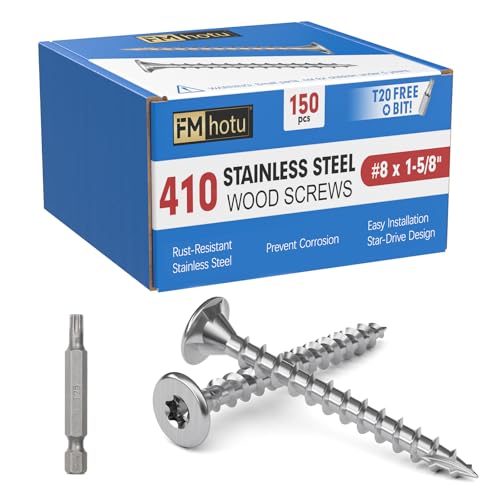
Premium Stainless Steel Construction: Crafted from 410 stainless steel, a top-grade alloy renowned for its exceptional strength and durability. Outperforming 304 stainless steel, these screws boast superior load-bearing capabilities, ensuring longevity even in challenging outdoor environments.
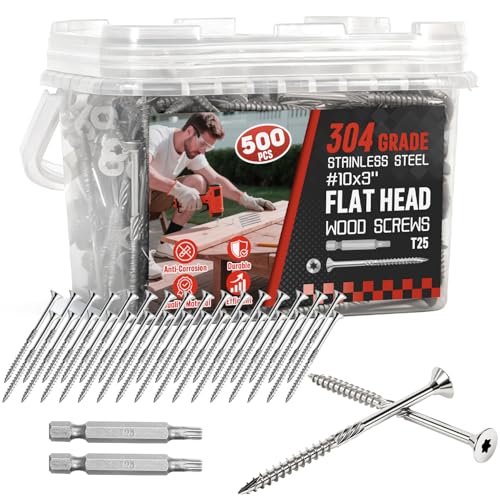
Defeat Rust for Good with 304 Stainless Steel - Tired of rusty screws ruining your project's look and strength? Get screws that stand the test of time. Crafted from premium 304 stainless steel, these construction screws resist corrosion in wet, coastal, and high-moisture environments, delivering lasting performance where ordinary screws fail.
Practical Selection Checklist for Durable Outdoor Fastening Projects
Before you plan an outdoor fastening project, know this: choosing the wrong fastener is the most common cause of early failure.
You should match the fastener to the environment, the timber or substrate, and the service life. For example, if you’re building a deck 200 meters from the ocean where salt spray hits daily, specify Type 316 stainless screws or mechanically galvanized bolts rated to AS 4312 for at least 50 years. That ensures the metal and preservatives won’t react and corrode quickly.
If you’ve ever seen rusty screws pop out of treated timber, here’s why: coastal or industrial sites accelerate corrosion. Use C4/C5 or stainless options for those locations. For a garden pergola 1 km inland with occasional fog, hot-dip galvanized (Class 3, 50 µm) fasteners will usually last 20–30 years.
Before you pick a metal, match it to preservative-treated timber. Avoid plain zinc with ACQ or CuAz-treated wood because copper in the wood attacks zinc coatings. Instead, go with Type 316 stainless, hot-dip galvanized to AS 4680, or mechanically galvanized coatings in severe zones. Example: for fence posts set in ACQ-treated pine, use 316 stainless carriage bolts and washers.
Why thermal expansion matters: different metals and substrates move at different rates, and that can loosen joints over time. Choose compatible metals and use neoprene washers or sealants rated for exterior use (e.g., polyurethane or MS polymer) to maintain a waterproof joint. Concrete-to-steel anchor example: use stainless sleeve anchors with a flexible polyurethane seal to prevent water entry and accommodate movement.
Follow AS 4312 to size coatings for your required design life. This gives you specific coating thicknesses and expected lifespans. For instance, if you need a 25-year life in a coastal suburb, AS 4312 will point you toward a hot-dip galvanizing thickness around 85–100 µm for bolts and nuts.
How to set maintenance and inspection intervals — because catching corrosion early saves you money. Tell yourself these steps:
- Inspect visible fasteners every 6 months in severe environments, every 12 months otherwise.
- Tighten or replace any fasteners with >10% section loss or visible thread corrosion.
- Recoat or replace fasteners showing surface rust within 2 years in marine zones.
Real-world example: on a beachfront boardwalk, the maintenance plan was visual inspections every 6 months, immediate replacement of any fastener with pitting, and full replacement of all fasteners after 20 years using 316 stainless. That project avoided structural failures and kept the deck safe.
Finally, pick compatible washers and sealants to prevent galvanic corrosion and leaks. Use stainless washers with stainless bolts, and apply a 3–5 mm bead of exterior-rated sealant at timber/metal interfaces if water intrusion is possible. This reduces maintenance and extends service life.
Recommended Products

QUICK AND EASY INSTALLATION: Secure your construction projects with Grip-Rite Exterior Screws. Self-starting T 17 point eliminates pre-drilling, while the star drive delivers increased torque and reduces splitting in treated lumber and hardwood.

Marine grade protection for superior corrosion resistance

PACKAGE CONTENT: Each package contains 150 pieces of #8 x 1-5/8 inch stainless steel 316 deck screws, weighing approximately 1.07 pounds, and includes a T20 star drive bit for easy installation.
Frequently Asked Questions
Can Dissimilar Metals Nearby Increase Fastener Corrosion Risk?
Yes — I’ve seen metal pairing boost corrosion risk: if dissimilar metals contact with electrolyte presence (moisture, salt) they form galvanic cells, accelerating the less noble fastener’s corrosion unless you isolate or choose compatible materials.
How Does Paint or Sealant Application Affect Fastener Longevity?
Like a shield, I’ll say paint or sealant greatly extends fastener life by adding coating thickness and preventing moisture; I’ll make sure primer compatibility with the metal to avoid galvanic issues and peeling that expose bare metal.
Are Fastener Heads More Prone to Corrosion Than Shanks?
Yes — I’ve seen fastener heads corrode more because surface finish and crevices get damaged, and environmental exposure concentrates moisture and salts there; heads often get scratched during installation, exposing underlying metal more than shanks.
What Maintenance Schedule Extends Outdoor Fastener Life?
I inspect quarterly and do seasonal inspections, like checking a ship’s rigging before storms; I tighten, clean, and replace corroded fasteners annually, and I do lubricant reapplication each spring and after any heavy exposure.
Do Threaded Connections Accelerate Galvanic Corrosion?
Yes — I think threaded connections can accelerate galvanic corrosion by creating a microgap crevice that traps electrolytes and raises differential aeration, and by increasing contact potential differences between dissimilar metals at mating threads.