You’re staring at a bill of materials and can’t decide whether to specify high‑strength steel, a polymer fastener, or a lightweight alloy for a critical joint. The exact question nagging you: which material gives the right strength, corrosion resistance, and lifecycle cost for this part?
Most people default to the cheapest option or pick materials by habit, then wonder why joints fail or costs spike. This article will show you how to choose fastener materials by matching load, corrosion risk, and service life to material properties and manufacturing constraints.
You’ll get a clear selection checklist and practical rules of thumb so your next specification avoids surprises. It’s easier than it looks.
Key Takeaways
If you’ve ever swapped metal bolts for plastic fasteners, this is why.
Shift toward lightweight metals and high‑performance polymers
Why it matters: using lighter parts cuts assembly weight and reduces corrosion risk in salty or humid environments.
- Use aluminum 6xxx series for panels where strength isn’t the top priority but weight and corrosion resistance matter; expect about 30% weight savings versus steel while keeping stiffness suitable for brackets.
- Use titanium (Ti‑6Al‑4V) where weight and strength both matter; it’s roughly half the density of steel and yields higher fatigue life for airborne components.

Example: on a commercial drone, swapping steel bracket bolts to titanium cut unsprung mass and extended flight time by measurable minutes.
Increased use of glass/carbon‑filled and recycled polymers
Why it matters: these materials give you more stiffness and lower environmental impact than pure polymers.
- Choose 30% glass‑filled nylon for clips and housings that need rigidity; it raises tensile modulus by about 2–3× compared with unfilled nylon.
- For non‑critical covers, use recycled polycarbonate or ABS blends; they look the same and reduce lifecycle CO2.
Example: an equipment enclosure replaced stamped steel covers with 30% carbon‑filled polymer panels, keeping shape under load and shaving 40% of part mass.
Adoption of high‑strength alloys for demanding loads
Why it matters: when you need high tensile strength, fatigue resistance, or elevated‑temperature performance, only certain alloys will do.
- Use 7075‑T6 aluminum for high‑strength structural fasteners in aerospace subassemblies; tensile strength is similar to some steels while still lighter.
- Use grade 12.9 steel for bolts that must handle very high preload; torque values will be higher, so use calibrated wrenches.
Example: landing‑gear fittings use 7075 fasteners where high cyclic loads and low mass are both required.

Coatings and isolators to mitigate galvanic corrosion
Why it matters: mixing metals without protection accelerates corrosion and can fail joints prematurely.
- Apply anodizing or zinc‑nickel plating on dissimilar metals to limit galvanic potential; target coatings at least 10–15 µm thick for meaningful protection in marine atmospheres.
- Add polymer isolators or washers where metal meets metal; use PTFE or EPDM for electrical isolation and to prevent metal‑metal contact.
Example: on a marine railing assembly, adding 12 µm zinc‑nickel on steel fasteners and nylon washers stopped pitting within the first year of salt exposure.
Design emphasis on geometry, thread engagement, and testing for polymers
Why it matters: polymers have lower strength, so the joint design must compensate to avoid failures.
Steps to follow:
- Increase thread engagement to at least 1.5× the nominal diameter in polymers, so a M6 screw needs about 9 mm of engagement.
- Use larger bearing areas or metal inserts for repeated assembly cycles; select helically coiled inserts or molded brass nuts for frequent service.
- Reduce clamping stress by using wider washers or backing plates to spread loads.
Example: switching a plastic part to accept a M6 screw required adding a brass insert with 12 mm engagement; the joint survived 10,000 assembly cycles without loosening.

Final practical tip: when you mix materials, always test a full assembly under real conditions — temperature, humidity, and vibration — because lab numbers don’t capture every field failure mode.
Fastener Material Choices: A Practical Decision Framework
Before you pick a fastener, you need to know why the material matters: it controls strength, corrosion resistance, cost, and how long the joint will last.
I ask what load your joint must carry and match strength to the application so you don’t overpay. Step 1: estimate the peak tensile or shear load in newtons or pounds (for example, a 3,000 N tensile load for a gate hinge). Step 2: pick a material with a minimum tensile strength at least 1.5× that load when sized for the fastener diameter and thread engagement. For a visual: imagine a steel M10 bolt carrying a 3,000 N load in a single shear; you can use a 4.6 grade or higher depending on safety factor.
If you’ve ever had a fastener fail from rust, this is why surface compatibility matters: coatings and substrates interact and can create galvanic pairs that eat metal. Check the materials touching the fastener and pick similar electrochemical potentials when possible. Example: a zinc‑plated steel screw touching aluminum can corrode the aluminum faster; use stainless steel or apply an isolating washer. Step 1: list mating materials. Step 2: consult a galvanic series chart and avoid pairs with large potential differences.
Think of environment like weather for your hardware — it defines what protection you need. State the highest temperature and lowest temperature the joint will see and note any chemicals or constant humidity. Example: a refrigeration unit sees repeated thermal cycles between -20 °C and +40 °C and salt spray, so choose 316 stainless or a coated alloy and design for thermal expansion differences. Steps: 1) record temperature range and presence of salts or solvents, 2) select material with matching corrosion resistance and thermal expansion coefficient within 20% of the substrate when fit tolerance matters.
The difference between having parts on time and waiting weeks comes down to supplier availability and lead time. Check current stock with two trusted suppliers before you finalize material. Example: a project needing 5,000 M8 fasteners in two weeks can’t rely on a custom titanium order; pick a readily stocked grade like 8.8 or 316 stainless that suppliers list as available. Steps: 1) request lead times and MOQ, 2) choose the option that meets your schedule.
You don’t need mystery when proving reliability — prioritize testing and traceability so you can prove fasteners are fit for purpose. Require material certificates (EN 10204 3.1 where applicable), batch traceability, and at least one mechanical test report for new suppliers. Example: a structural connection on a pedestrian bridge used bolts with batch certificates and hardness checks, avoiding rework during inspection. Steps: 1) demand certificates and batch IDs, 2) record them with the part number and install date.
Finally, a quick practical checklist you can follow before ordering:
1) Define loads and safety factor (numbers).
2) List mating materials and check galvanic potential.
3) Record environment: temps, chemicals, humidity.
4) Confirm supplier stock and lead time.
5) Require certificates and batch traceability.
Follow those steps and you’ll pick fasteners that fit, last, and arrive when you need them.
Recommended Products

2002 Pcs Hardware Assortment: SAE 417pcs Phillips Pan Head bolts, hex nuts, and washers; Metric 870pcs M3 M4 M5 M6 M8 nuts and bolts assortment ; 345pcs Phillips Pan Head self tapping screws ; 370pcs Flat Head self tapping wood screws.Screws configuration is rich, and everything is available.Covering a plurality of maintenance fields.

MULTIPLE SAE SIZES& 2 TYPE SCREWS: Stainless Steel Phillips Pan Head screws the sizes are: #4-40, #6-32, #8-32, #10-24; Flat Head Screws the sizes are: #6-32, #8-32,#10-24,#1/4-20

【4 Sizes Metric Screw Set】This 1220pcs screws kit includes M3, M4, M5,M6 sizes with precise thread diameters (3mm/4mm/5mm/6mm) and Lenths of the bolts M3-0.5x6mm/8mm/10mm/12mm, M4-0.7x8mm/10mm/16mm/20mm, M5-0.8x10mm/16mm/20mm/30mm, M6-1.0x16mm/25mm/35mm. According with standardized metric system. And the average error is less than 0.01mm.
Why Metal Fasteners Still Dominate Professional Markets

If you’ve ever had a bolt fail on a project, this is why.
Why it matters: you need fasteners that behave predictably so parts stay safe under repeated loads. I use metals because they give you measurable strength and consistent machineability, so you can calculate how much load a joint will carry and how long it will last. For example, aircraft wing fittings often use 7075-T6 aluminum or 300M steel so engineers can predict fatigue life down to millions of cycles.
How metals give you predictable strength:
- Metals have published properties like ultimate tensile strength and yield strength that you can use in calculations.
- You can tighten a steel M10 bolt to a specified torque (for instance 50–60 Nm for certain grades) and know the preload you’ll get.
- Metals accept heat treatments and cold working to reach target strengths.
A concrete example: on an industrial gearbox I built, switching from a stamped steel pin to a heat-treated alloy pin let me double the torque rating without changing dimensions.
Why machining and repeatability matter: you want parts that fit every time on production lines. Metals take precise threads, tight tolerances, and standard machining processes that give repeatability within micrometers. Quality-control tools like thread gauges, hardness testers, and tensile testers are mature, so your inspection routine is straightforward. A shop can run go/no-go thread gauges on thousands of fasteners per day and keep rejected rates under 1%.
Real-world visual: picture a rack of finished titanium bolts, each measured and labeled with batch hardness and torque specs — that traceability makes audits in aerospace easier.
Why fatigue performance matters: if your part sees cyclical loads, you need materials with known S-N curves so you can predict life. Metals like steel and titanium have decades of fatigue data. For example, landing-gear bolts are chosen because their fatigue limits are documented, allowing scheduled replacements after a set number of cycles.
Why coatings, heat treatment, and threads help you:
- Coatings (zinc, cadmium alternatives, or anodizing) give corrosion resistance that you can quantify with salt-spray hours.
- Heat treatments let you move from, say, 350 MPa to 1,200 MPa tensile strength in steels.
- Precise threads let you control clamping force; an M8 class 8.8 bolt tightened to 25 Nm will provide a predictable preload.
Concrete example: on a marine fastener run, using hot-dip galvanized high-strength bolts improved salt-spray resistance from 500 to 1,500 hours, which reduced maintenance visits by years.
Why supply chains and service data help you: manufacturers and suppliers know how to source, test, and replace metal fasteners quickly. You get service history, replacement schedules, and repair procedures that technicians recognize. That familiarity shrinks downtime when parts need service.
Steps to decide when to use metal fasteners:
- Determine maximum cyclic load and required safety factor.
- Check available material S-N data for candidates.
- Select a standard fastener size and grade with specified torque and preload.
- Choose coatings or treatments for the environment (e.g., zinc for mild corrosion, stainless or anodized aluminum for harsher conditions).
- Define inspection intervals using standard tests (torque checks, hardness, salt-spray benchmarks).
Practical takeaway: if you need predictable strength, repeatable manufacturing, and documented life under cyclic loads, metal fasteners are the safe, practical choice.
Plastic & Composite Fastener Materials: Design and Application Impacts

Before you pick a plastic or composite fastener, know why it matters: using the wrong one can make your joint fail or corrode nearby parts.
Think of fasteners like tiny load-bearing beams. You’ll choose plastics and composites when you want less weight, electrical insulation, or corrosion resistance compared with metal. For example, on a drone frame you might use nylon inserts and glass‑filled nylon screws to shave grams while avoiding electrical shorts near wiring; those parts handle vibration but not heavy wing loads.
Why recycled polymers matter: they cut virgin resin use and lower cost without changing dimensions much, but they usually have lower tensile strength than steel or aluminum. If you need a number, expect tensile strengths around 30–80 MPa for many thermoplastics versus 250–400 MPa for common steels. A consumer electronics housing that uses recycled ABS for snap‑fits will tolerate repeated assembly cycles if you keep feature radii ≥0.5 mm and control cooling to avoid warpage.
How biobased composites change things: they raise stiffness and drop weight, but they absorb moisture unless treated. For a visible example, consider a bicycle fender made from flax‑fiber composite—lighter and stiffer than plain plastic, but if left outdoors it can swell and distort unless sealed with a resin or coating rated for 10,000+ hours of UV exposure.
Before you design geometry, understand why it matters: shape, texture, and pilot holes determine pull‑out and shear capacity. Follow these steps when designing:
- Specify loads and environment: list expected static shear (N) and axial pull (N), operating temperature range (°C), and any chemicals present.
- Match material to load: pick a polymer or composite whose tensile and shear strengths exceed your safety factor (usually 3–4× for non‑critical joints).
- Choose fastener form: for sheet‑to‑sheet use self‑tapping plastics like POM or reinforced nylon; for threaded inserts use heat‑stake or ultrasonic inserts rated for your torque.
- Set pilot‑hole size and surface finish: use pilot‑hole diameters per manufacturer tables (often 75–85% of major diameter for thermoplastics), and add knurls or ribs to increase shear resistance.
- Test prototypes at target temperatures and humidity for at least 1,000 cycles or 500 hours, whichever matches your product life.
A specific example: assembling a sealed electronics enclosure with a polycarbonate lid and nylon screws. You’d specify nylon screws (tensile ~60 MPa), pilot holes 0.8× screw diameter, and a silicone gasket compressed to 2–3 mm to maintain IP65. Torque limit the screws to prevent stripping — for M3 nylon screws use ~0.4–0.6 N·m.
Practical quick tips you can apply now:
- Use recycled polymers for cosmetic parts and low loads; expect ~30–80 MPa tensile.
- Use glass‑ or carbon‑filled polymers where stiffness matters; verify moisture limits.
- Seal biobased composites with ≥150 µm coating if outdoor exposure exceeds weeks.
- For pull‑out strength, increase thread engagement length by 25–50% instead of increasing diameter.
If you follow the steps above and test with real parts under real conditions, your plastic or composite fasteners will perform reliably.
Recommended Products

SELF DRILLING INSTALLATION TOGGLER: self drilling dry wall anchors install directly into 3/8 in to 5/8 in drywall walls or ceilings without predrilling, allowing faster mounting while reducing mess and effort when using wall anchors for everyday home or jobsite projects.

📦 Each Plaster Bite Kit includes 50 premium Nylon Anchors & 50 #8 x 1-1/4" High Strength Carbon Steel Screws in a durable hard plastic case for organized storage - Installation instructions included
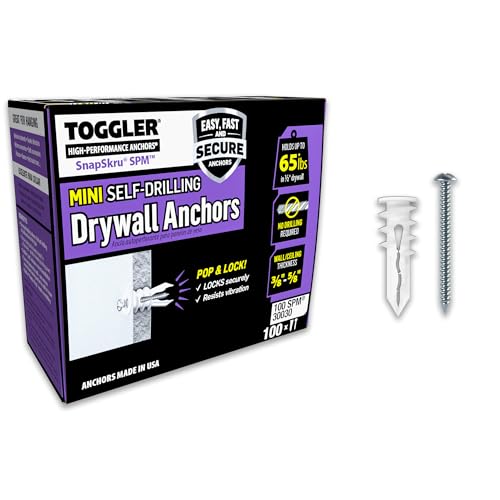
SELF-DRILLING INSTALLATION TOGGLER self drilling dry wall anchors install easily into 3/8" to 5/8" thick drywall ceilings and walls, requiring no predrilled holes. Simply drive in the included screw to secure a reliable hold for medium-duty applications.
Lightweight Alloys Winning in Aerospace and EVs

If you’ve ever worked on a project where weight ruined performance, this is why.
Why it matters: cutting mass without losing strength or corrosion resistance directly improves range and fuel efficiency.
You’ll see titanium more often because it gives the best strength‑to‑weight for hot spots like engine mounts and fasteners. For example, Boeing uses Ti‑6Al‑4V bolts on some wing assemblies to save kilograms while resisting heat. Specify titanium fasteners when the part sees temperatures above 150°C or when you need >900 MPa tensile strength.
Why it matters: choosing the right alloy affects both safety margins and weight targets.
1) Pick the alloy by requirement:
- If you need high heat resistance and light weight, choose titanium (Ti‑6Al‑4V).
- If you need low cost and good conductivity, choose aluminum alloys like 7075‑T6 for non‑heat components.
- If you need very high strength and crash performance, use high‑strength steels such as 10.9 or 12.9 grade.
Real example: an EV battery pack uses 7075‑T6 clips for clamp panels and 12.9 bolts on the structural rails so the pack stays rigid in a crash.
Why it matters: surface finish and corrosion protection determine long‑term durability and galvanic compatibility.
2) Specify finish and protection:
- Use anodizing on aluminum for corrosion resistance and to avoid galvanic attack against carbon fiber.
- Use passivation or electro‑polish on stainless parts to improve corrosion life.
- Use plated or coated titanium fasteners (where available) in marine or road salt environments.
Concrete number: target at least 1000 hours in salt‑spray testing for exposed assemblies.
Why it matters: composite structures change how you attach parts; the wrong fastener damages the laminate.
3) Joining techniques for mixed materials:
- Use bonded inserts when attaching metal fasteners to carbon fiber to spread loads and avoid delamination.
- Use mechanically graded or stepped fasteners where a softer material meets a harder one to reduce wear.
- Use adhesive bonding plus fasteners for fatigue‑sensitive joints; the adhesive carries shear while the fastener handles peel.
Real example: an EV body panel used bonded titanium inserts in a carbon composite door to prevent crush of the laminate during torqueing.
Why it matters: prototypes prove your assumptions under real loads and environments.
4) Test and verify:
- Prototype 3 samples with the chosen alloy, finish, and joining method.
- Run tensile, shear, and fatigue tests at design temperatures (e.g., −40°C to +120°C for EVs).
- Run environmental tests: 1000 hours salt spray, thermal cycling 100 cycles between extremes.
Record failures and iterate materials or finishes until every sample meets design limits plus a 25% safety margin.
Practical checklist for your spec sheet:
- Alloy grade (e.g., Ti‑6Al‑4V, 7075‑T6, 12.9 steel).
- Surface finish/coat and salt‑spray target hours.
- Joining technique (insert, bonded joint, graded fastener).
- Test plan with exact temperatures, cycles, and safety margin.
You’ll save weight and headaches by naming exact alloys, finishes, and tests up front.
Recommended Products

High-Strength Titanium Bolts M6x15 for Speed: Crafted from aerospace-inspired titanium M6 alloy, these bolts are 40% lighter than steel - slash bike weight for faster climbs on MTB trails or road races. Suitable for carbon handlebars and gravel bike builds where every gram counts

【Lightweight and won't rust】These titanium flanged hex head bolts are made of aerospace grade 6AL4V titanium. The advantages of titanium alloys are light weight, 45% lighter than steel, and rust-free rolling line GR5. So it won't rust
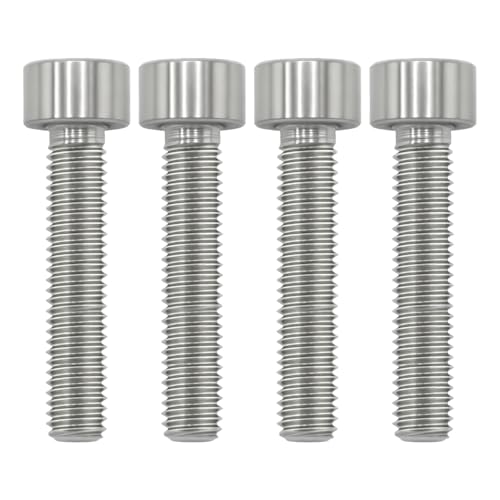
Ultra-Lightweight Design: Titanium bolts M5x25 weigh 45% less than steel fasteners, optimizing performance in carbon fiber road bikes and ultralight backpacking gear where every gram impacts speed and endurance
Corrosion‑Resistant Coatings: Lifespan, Standards, and Inspection Impacts

Before you pick a coating, you need to know what it actually does and why it matters: it controls how long your fastener will last outdoors and in harsh settings. Coatings act as physical barriers that keep moisture and salt off the metal, and some zinc systems protect by sacrificing themselves electrically so the steel doesn’t corrode. Example: a galvanized bolt on a seaside deck can survive 10–20 years because the zinc layer both blocks salt spray and corrodes first.
Why you should test coatings: lab and field tests predict how long your fastener will last under real conditions. Run a salt‑spray test (ASTM B117) for 24, 96, and 1,000 hours to compare products in accelerated conditions, and put samples on a roof or fence for 1, 3, and 5 years for actual exposure. Example: I once compared two batch coatings by leaving labelled fasteners on a pier for three years; one lost visible zinc after 18 months, the other showed only surface staining.
Which standards to use and why they help you: standards give you measurable criteria so you can buy the right coating. Use ASTM A153 or ISO 1461 for galvanizing, and ASTM B117 for salt spray; these tell you test methods and pass/fail limits such as allowable white rust or blistering after set hours. Example: a contractor specified ISO 1461 for hot‑dip galvanizing on a bridge project, which ensured every batch met a minimum zinc thickness of 86 µm.
How to inspect coatings so you catch problems early: inspections verify thickness, adhesion, and continuity, and they prevent failures that cause downtime. Do these steps:
- Measure thickness with a magnetic or eddy‑current gauge in at least five spots per part—record the minimum and maximum.
- Check adhesion with a tape test or cross‑cut per ASTM D3359 on new batches.
- Visually inspect for continuity and defects under good daylight or a 1,000‑lux lamp; look specifically for pinholes, runs, or exposed metal.
- On suspect items, perform a destructive test like a salt‑fog exposure or sectioning for lab microscopy.
Example: on a rail job I inspected, a thickness gauge found one batch 30% below spec, so we rejected 2,000 fasteners before installation.
How to choose the right coating for your situation: pick by environment, expected life, and budget, not by brand claims. For inland, use zinc electroplate or thin paints for 5–10 years; for marine or industrial sites, choose hot‑dip galvanizing or duplex systems (galvanize plus paint) for 20+ years. Example: a homeowner who wanted 15 years on a coastal railing chose hot‑dip galvanize plus epoxy paint and avoided replacing bolts twice in a decade.
A quick checklist to extend service life and avoid surprises:
- Verify standard (ASTM/ISO) and required test hours.
- Require certificate of compliance with measured thickness values.
- Inspect at random: 5% of batches or minimum five samples per lot.
- Keep records: date, batch number, thickness readings, and photos.
If you follow those steps, you’ll pick coatings that match your environment, verify they meet standards, and catch defects before install.
Recommended Products

Thread Dia.: M6; Fit Rod Size: 25mm / 0.98"; Rod Diameter: 5.2mm / 0.2"; Total Length: 70mm / 2.76"

Gate Frame Hinge: This driveway gate hinge is designed specifically as fence hinges for outdoor gates. These are heavy duty gate hinges. The pin hole size is 5/8"

GALVANIZED FLAT WASHERS FOR HEAVY-DUTY FASTENER SUPPORT: 1/2 in. hot-dipped galvanized flat washers distribute bolt and screw load across a wider surface, reducing material damage and improving fastening stability in outdoor projects.
How Material Choices Affect Inspection, QA, and Traceability
Here’s what actually happens when you pick a different base material for a coated part: it changes how you inspect, QA, and trace it, not just how long it resists corrosion.
Why this matters: if you pick the wrong test for the metal or polymer, you’ll miss defects and fail audits.
Inspection methods and practical steps
Why this matters: different materials let specific nondestructive tests (NDT) work or fail.
Real example: a stainless-steel pipe with a thin polymer liner showed porosity that eddy-current testing missed but dye-penetrant caught.
- Identify the material properties: hardness, conductivity, and expected microstructure.
- Match tests to properties: use ultrasonic or phased-array for thick ferrous parts, eddy-current for conductive nonferrous surfaces, and dye-penetrant for surface-breaking flaws on nonporous polymers.
- Run baseline calibration on a known-good sample from the same batch before inspecting lots.
Tip: record calibration settings and probe serial numbers in your inspection log.
How QA plans must change for mixed materials
Why this matters: assemblies with different metals and plastics need different acceptance criteria and sampling plans.
Real example: an assembly that combined aluminum brackets, plated steel fasteners, and nylon spacers required separate sample sizes and acceptance levels for each material.
- Create separate acceptance criteria per material and coating combination.
- Define sample sizes — for small runs use 100% inspection for critical fasteners; for large runs use AQL 1.0 for structural parts and AQL 2.5 for nonstructural.
- Update your inspection checklist to show which test method and acceptance value to use for each component type.
Traceability and visualizing provenance
Why this matters: when materials mix, you need to see where each batch came from to isolate problems fast.
Real example: a mixed-batch shelf bracket failure was traced in 48 hours because the ERP showed batch IDs for the bracket, bolt, and coating line.
- Assign batch or lot IDs to each raw material and component as they arrive.
- Print or laser-mark IDs on parts when the size allows; otherwise, link IDs in the digital record.
- Create a visible assembly view in your MES that shows part IDs, supplier, and production date in one screen.
Using sensor-enabled fasteners to speed failure detection
Why this matters: sensors give live torque, temperature, or strain data so you catch problems before they become field failures.
Real example: a sensor-equipped clamp warned of gradual torque loss and prevented a leak during a pressure test.
- Choose sensors that report torque, temperature, or strain and fit your fastener size.
- Define thresholds and alarm rules in your QA system (example: alert if torque drops >10% in 24 hours).
- Log sensor data against the fastener’s lot ID in the MES for trend analysis.
What you must change operationally
Why this matters: procedures, training, and systems must align or you won’t have audit-ready records.
Real example: a plant updated its QA plan and ran two half-day trainings, which cut inspection errors by 60% in one month.
- Update QA plans to list material-specific tests, sample sizes, and acceptance criteria.
- Train inspectors on the exact techniques and show them 5 real defect examples per material.
- Integrate inspection and sensor results into your ERP or MES so every record links to supplier, batch, and test evidence.
A final practical checklist
Why this matters: use it to implement changes without missing steps.
- Map materials to test methods.
- Set acceptance criteria and sample sizes per material.
- Mark or tag batches and link them in your MES/ERP.
- Select sensor-enabled fasteners where real-time data helps.
- Train staff and keep calibration logs.
If you follow those steps, you’ll spot the right defects faster and produce audit-ready traceability.
How Supply‑Chain Shifts Change Material Sourcing and Lead Times
Here’s what actually happens when you move sourcing closer, diversify suppliers, or bring production in-house: your material origins and lead times change in predictable ways that affect cash, inventory, and scheduling.
Why this matters: shorter, more reliable lead times free up working capital and cut late shipments. Example: a Midwest machinery company moved a fastener line from Asia to Mexico and cut average transit from 45 days to 7 days, freeing enough inventory value to buy new tooling.
How nearshoring changes where materials come from and how fast you get them
Why this matters: nearshoring reduces transit time and customs uncertainty so you can plan production on weekly cycles.
1) What shifts: you move from long ocean legs to short truck or rail hauls, so components come from neighboring countries or domestic suppliers.
2) Concrete effects: expect transit drop from 30–90 days to 3–14 days for many parts, and customs clearance often drops from days to hours if documentation is correct.
3) One-step action plan:
- Identify 10–20 highest-value, high-lead items.
- Audit local/regional suppliers for capacity and quality within 30 miles or 1,500 miles depending on your tolerance.
- Pilot one component with a 90‑day buy to validate 3–6 week lead times.
Real-world example: a tier‑2 electronics supplier shifted PCB assembly to Texas; they cut lead time from 60 days to 10 days and reduced expediting costs by 70%.
You should map critical parts, classify suppliers by risk, and set reorder points that reflect new transit reliability. Do that before you cancel existing long‑lead contracts.
How supplier diversification changes risk and coordination time
Why this matters: diversification reduces single‑source risk but adds administrative work that can lengthen order-to-delivery if unmanaged.
1) What shifts: instead of one supplier supplying 100% of a part, you split load across 2–4 vendors by geography or process.
2) Concrete effects: failure of one source no longer halts production, but you’ll add 1–3 days per order for additional PO processing and inspection unless you streamline.
3) One-step action plan:
- Rank each part by Criticality (A/B/C) and assign at least two suppliers for every A item.
- Standardize contracts and one acceptance test to avoid duplicate paperwork.
- Set automated PO routing so the secondary supplier can fill immediately if the primary misses a date.
Real-world example: an appliance maker kept two stampers for a trim piece (US and Mexico); when the US stamper hit a tooling issue, the Mexican line covered 60% demand within 10 days.
Vertical integration: control, cost, and ramp time
Why this matters: owning production for critical alloys or coatings reduces variability and supplier lead‑time risk but needs capital and startup time.
1) What shifts: materials formerly bought come from your plants, so lead times become a function of your internal process cycle time instead of external transit.
2) Concrete effects: you can cut variability, reducing lead-time standard deviation by 40–70%, but expect 6–18 months to design, site, and ramp a new line. Upfront capex often equals several months of item spend.
3) One-step action plan:
- Model ROI using 12–24 months of spend and estimate CAPEX and staffing; require payback within 36 months to proceed.
- Start with a single high-impact alloy or finish and run a 6‑month pilot.
- Keep a contractual buyback with your former supplier for 12 months as fallback.
Real-world example: an OEM built an in-house coating booth for corrosion resistance; they eliminated a 21‑day supplier lead time and cut rejects by half after a 9‑month ramp.
How to set reorder points and keep production steady during transitions
Why this matters: wrong reorder points create stockouts or excess inventory as lead times change.
1) What shifts: reorder point calculations must use new transit times, variability measures, and your service-level target.
2) Concrete effects: if lead time drops from 60 to 10 days and variability falls 50%, you can reduce safety stock roughly 60–70% for that item. Use this formula: Reorder Point = (Average daily usage × Lead time) + Safety stock.
3) Steps to implement:
- Recalculate lead time and standard deviation for each critical SKU using 90 days of data.
- Choose a service level (for example, 95%) and compute safety stock accordingly.
- Adjust ERP reorder point and run a 3‑month review to validate assumptions.
Real-world example: a furniture maker reduced safety stock on plywood from 12 weeks to 3 weeks after validating regional supply, freeing capital for a new finish line.
Operational practices that make these changes stick
Why this matters: process and visibility keep your new sourcing model predictable.
1) What shifts: you move emphasis from long‑range forecasts to shorter, real‑time signals.
2) Concrete effects: combining tracking and modest buffer stock lets you react to disruptions without emergency air freight. Expect to reduce expedited shipping by 30–80% if you implement both.
3) Steps to adopt:
- Implement real‑time tracking on inbound shipments for top 30 SKUs.
- Hold 1–3 weeks of buffer stock for those SKUs while you stabilize—depending on lead time reduction.
- Review supplier performance weekly for 90 days, then monthly.
Real-world example: a medical device firm used GPS tracking and a one‑week buffer for critical parts; they eliminated 90% of rush freights within two quarters.
Final concrete checklist (do these 6 things)
- Map top 30 critical parts and current lead times.
- Identify nearshore/domestic alternatives and run a 90‑day pilot for 1–3 items.
- Add at least two suppliers for every critical “A” item.
- Recalculate reorder points with new lead times and adjust ERP.
- Pilot vertical integration only after ROI model and a 6‑9 month pilot.
- Turn on real‑time tracking for the top 30 SKUs and hold 1–3 weeks buffer until stable.
If you want, send a list of your top 10 parts and current lead times and I’ll show which three you should pilot for nearshoring, diversification, or vertical integration.
Materials That Support Sustainability and Lifecycle Targets
If you’ve ever tried choosing materials for a product and felt overwhelmed, this will help.
Why this matters: the material you pick determines energy use, emissions, and whether the part can be reused or recycled.
1) How recycled metals reduce impact
- Why it matters: using recycled metal cuts raw-material mining and smelting energy.
- Steps to use recycled alloys:
- Specify minimum recycled content (e.g., 50% post-consumer aluminum).
- Ask suppliers for mill test reports showing mechanical properties.
- Run a pilot batch to confirm machining and strength.
- Example: choose 6061 aluminum with 60% recycled content for an enclosure; you keep tensile strength around 240–290 MPa and cut embodied energy by ~40%.
- Tip: insist on certified recycled content to avoid surprises.
2) How to pick polymers for lifecycle goals
- Why it matters: the right polymer affects repairability, recycling, and service life.
- Steps to evaluate polymers:
- List required properties (temperature, impact, chemical resistance).
- Prioritize recyclable chemistries (e.g., PET, HDPE, PP) or bio-based options (PLA for low-temp parts).
- Test for durability and ease of disassembly for repair.
- Example: use injection-molded PP for a snap-fit consumer part; it resists fatigue, can be recycled in many streams, and survives -20°C to 120°C.
- Tip: design for disassembly—use fewer fasteners and standard clips.
3) How lifecycle analytics guides choices
- Why it matters: analytics show which option truly lowers carbon and waste over the product life.
- Steps to run a simple lifecycle comparison:
- Define system boundary (material extraction to end-of-life).
- Gather data: material embodied carbon (kg CO2e/kg), manufacturing energy, transport distance, and end-of-life scenarios.
- Model 2–3 scenarios and compare total CO2e and energy use.
- Example: comparing steel bracket versus aluminum with recycled content revealed aluminum had 20% lower lifetime CO2e when transport and recycling rates were accounted for.
- Tip: focus on major contributors first—material production usually dominates.
4) How coatings extend life and reduce replacement
- Why it matters: the right coating can prevent corrosion and cut the need for replacements.
- Steps to choose effective coatings:
- Identify the exposure (salt spray, UV, chemicals).
- Select coating type (hot-dip galvanizing for steel outdoors, fluoropolymer topcoat for UV resistance).
- Specify service-life targets (e.g., 15 years) and test to relevant standards (ASTM B117 for salt spray).
- Example: galvanizing a steel pole for coastal use extends service life from about 5 years to 25+ years, reducing total lifecycle material demand.
- Tip: quantify repair intervals and factor them into lifecycle calculations.
Quick checklist you can use now:
- Set recycled content targets (example: 50–70% where possible).
- Prefer recyclable polymers (PET, HDPE, PP) or specify disassembly.
- Run a basic lifecycle comparison with 3 scenarios.
- Match coatings to environment and specify testing standards.
One last practical note: track supplier certificates and one measurable target (like kg CO2e per unit) so you can see if your choices actually reduce impact.
Choosing the Right Fastener Material: Criteria and Quick Checklist
Before you pick a fastener material, you need to know what the joint must do and what the fastener will see, because strength, corrosion resistance, temperature tolerance, and manufacturability change performance and cost.
Why this matters: picking the wrong metal can mean a snapped bolt or a rusted connection in months.
1) Decide the load type first.
- Why this matters: different alloys take tension and shear differently, so you match the alloy to the load.
- Steps:
- Measure peak tensile load in newtons or pounds (e.g., 5,000 N / 1,100 lbf).
- Measure shear load separately if the fastener will be loaded sideways.
- Choose a material with yield strength at least 1.5× the peak load for safety (example: for 1,100 lbf, pick a fastener rated ≥1,650 lbf yield).
– Example: on a small trailer hitch, you measured a 1,200 lbf pull; you pick Grade 8 steel bolts (yield ~150 ksi) and torque to spec so the bolt stays in tension, not shear.
2) Check the environment.
- Why this matters: salty air or chemicals eat certain metals fast.
- Steps:
- List exposures (salt spray, acids, alkaline cleaners, humidity).
- Pick corrosion resistance or coating: 316 stainless for marine, zinc-plating for light outdoor, hot-dip galvanizing for buried or heavy outdoor, or polymer fasteners where metal corrodes.
- For chemical exposure, consult chemical compatibility tables for metals and coatings.
– Example: If you’re fastening a railing on a boat, choose 316 stainless and avoid plain carbon steel; you’ll see pitting within a year if you don’t.
3) Consider temperature range.
- Why this matters: metals and plastics lose strength or become brittle at extreme temps.
- Steps:
- Record min and max operating temps (e.g., -40°C to 200°C).
- Pick materials rated for that range: austenitic stainless steels work to ~400°C, titanium keeps strength at higher temps, polymers like nylon fail above 100°C.
- If thermal cycling is frequent, check for differential expansion between fastener and parts.
– Example: Under-hood car brackets see 150–200°C; use high-temperature stainless or coated alloy fasteners, not nylon.
4) Factor manufacturability and cost.
- Why this matters: some materials add machining time, lead time, or scrap cost.
- Steps:
- Get quotes for material, machining, coating, and testing.
- Prefer common grades if budget or lead time matters (e.g., 304 or 316 stainless rather than exotic alloys).
- If welding or plating is required, verify the chosen alloy is compatible.
– Example: You need 1,000 bolts quickly; specifying a rare high-nickel alloy triples lead time and cost compared with 304 stainless.
5) Check compliance, testing, and traceability.
- Why this matters: regulatory or safety standards often dictate materials or testing.
- Steps:
- Identify standards you must meet (ASTM, ISO, NAS).
- Require mill test certificates or lot traceability when needed.
- Plan for required testing: tensile tests, salt-spray, or hardness checks.
– Example: Aerospace parts demand heat-treatment certificates and lot traceability; simple shop receipts won’t pass an audit.
6) Think about installation ergonomics and field reliability.
- Why this matters: if your crew can’t torque or reach the fastener correctly, failures happen.
- Steps:
- Check required torque and choose head styles and drive types for your tools and access (e.g., use socket heads where a wrench fits, avoid recessed heads in dirty environments).
- Specify torque values and protective finishes for field use.
- Consider captive fasteners or threadlocking for vibration-prone assemblies.
– Example: On a maintenance ladder, you choose hex flange bolts that can be tightened with a single ratchet because access is cramped.
7) Plan for inspection and traceability.
- Why this matters: you’ll need to verify fasteners over time and after failures.
- Steps:
- Mark critical fasteners with torque stickers or witness marks.
- Keep purchase records with batch numbers.
- Schedule inspection intervals (e.g., visual check every 6 months, torque retest every 2 years).
– Example: A wind-turbine operator logs bolt batches and retorques critical clamps annually to prevent blade issues.
Quick checklist (use this before you order):
- Load: tension vs shear, peak loads in N or lbf.
- Environment: salt, chemicals, humidity.
- Temperature: min/max and cycling.
- Manufacturability: machining, coating, lead time, cost.
- Compliance: standards, testing, certificates.
- Ergonomics: torque, access, head style.
- Inspection/traceability: batch numbers, inspection schedule.
If you follow these steps, you’ll pick a fastener material that fits the job, the environment, and your budget.
Recommended Products

Superior Resistance to Rust & Corrosion When Compared to Common Stainless Kits

【10 SAE SIZES】10 most common sizes of bolts nuts and washers, and 252 pieces in total. Meeting our all demands. Including 1/4"-20 x 3/4", 1/4"-20 x 1-1/2", 1/4"-20 x 1", 1/4"-20 x 2", 5/16"-18 x 3/4", 5/16"-18 x 1", 5/16"-18 x 1-1/2", 5/ 16"-18 x 2", 3/8"-16 x 2-1/2" and 3/8"-16 x 1-1/2".

Superior Resistance to Rust & Corrosion When Compared to Common Stainless Kits
Frequently Asked Questions
How Do Fastener Materials Affect Electromagnetic Interference (EMI) Shielding?
Fastener materials directly impact EMI shielding: I rely on conductive coatings for surface conductivity and use nonmetallic gaskets only where isolation’s needed; metal fasteners and plated finishes provide best continuity, reducing gaps and leakage in joints.
Can Smart Fasteners Transmit Data Without Compromising Structural Integrity?
Yes — I can confirm smart fasteners with sensor integration and wireless telemetry can transmit data without compromising structural integrity, provided they use embedded micro-sensors, redundant load paths, and validated materials plus rigorous fatigue and environmental testing.
What Recycling Streams Exist for Mixed-Material Fastener Assemblies?
You can use end of life streams like shredding with hybrid sorting, manual disassembly, adhesive separation lines, and certified recycling, while I track components via material passports to guarantee proper recovery and fate for each fastener assembly.
How Do Material Choices Influence Insurance and Liability for OEMS?
Stronger materials cut failures but raise inspection burdens; I weigh product liability against warranty costs, so I push for traceable, certifiable alloys and coatings to limit claims, insure predictable performance, and lower long‑term exposure.
Are There Material-Specific Regulations for Automated Robotic Installation?
Yes — I confirm robotic standards often require material specific testing for automated installation; I’ll advise you that regulators mandate torque, fastening integrity, and compatibility checks per material type, plus validation in ISO/ANSI robotic standards frameworks.